Home > Services > Mobile App Development > California
MobileAppDevelopmentCompanyinCalifornia
California is the most demanding mobile app market in the United States. The consumer apps that set the global standard for iOS design quality were built here. The venture investors who fund Series A and B mobile products here expect clean architecture and technical due diligence readiness from day one. The regulatory environment, anchored by CCPA and CPRA, is the strictest consumer data protection framework in any US state.
Noukha Technologies builds mobile applications for California businesses that operate in this context: startups scaling from seed to Series B in Silicon Valley, entertainment and creator platforms in Los Angeles, biotech and life sciences tools in San Diego, and enterprise products across the state that must meet California's data privacy standards at the architecture level. We build on iOS, Android, Flutter, and React Native with the same engineering depth for a South Bay Series A client as for a Santa Monica consumer app.

Recognized. Respected. Relied Upon.
Our listings on Clutch, GoodFirms, and RightFirms are backed by verified client interviews. California businesses evaluating development partners use these platforms to check independently — and our record supports the comparison.


Why California Is the Most Demanding App Development Market in the USA
California is not one market. It is four distinct business ecosystems — each with different product requirements, compliance obligations, and user expectations.
California's GDP
5th largest economy in the world
California residents
Largest population of any US state
CA users can trigger CCPA duties
One of three statutory CCPA/CPRA thresholds
distinct California tech markets
Bay Area, LA, San Diego & Inland Empire/Sacramento
Understanding California's Four Major Technology Markets
Building a mobile app for a California business requires understanding which California market you are operating in. Product requirements, compliance considerations, and user expectations vary significantly across the state.
Silicon Valley & the Bay Area — The Investor Standard
Palo Alto, Menlo Park, South of Market San Francisco, and the broader South Bay host the product companies, venture funds, and accelerators that define what a technology product is expected to be. Bay Area mobile projects are almost always iOS-first consumer or B2B SaaS applications, evaluated by investors for architecture quality, scaling potential, and the absence of shortcuts that become expensive liabilities later. Timelines are aggressive because fundraising windows are time-sensitive.
Los Angeles — The Creator and Entertainment Economy
Los Angeles is the dominant US market for entertainment technology, creator economy platforms, and consumer media applications. Hollywood's shift to streaming has driven demand for content distribution apps and production workflow tools, while the creator economy from West Hollywood to the South Bay has produced a generation of apps for content monetization and creator-to-fan commerce. LA projects lean iOS-first with in-app purchase infrastructure, video streaming, and social features.
San Diego — Biotech, Life Sciences & Defense Technology
San Diego hosts one of the largest biotech clusters in the US, anchored by Torrey Pines Mesa and extending across La Jolla, Sorrento Valley, and Carlsbad. Mobile development here spans two contexts with little overlap: life sciences apps (patient-facing tools, clinical trial apps, lab workflow, device companions) under FDA digital health guidance and HIPAA, and defense-adjacent apps near Naval Base San Diego and Camp Pendleton requiring CMMC framework awareness.
Inland Empire & Sacramento — Logistics and Government Technology
The Inland Empire has the second largest logistics and warehousing market in the US, driving demand for warehouse management apps, driver dispatch platforms, and last-mile delivery tools. Sacramento, as California's state capital, concentrates government technology, public sector health applications, and education technology for the state's K-12 and community college systems.
Building for California's Privacy Framework
CCPA and CPRA are the strongest consumer data protection laws in the United States. We address these requirements during architecture design, not as a post-development compliance review.
Data Subject Rights — Know, Delete, Correct, Opt-Out
CCPA and CPRA give California users the right to know what personal information has been collected, request deletion that propagates to third-party services, correct inaccurate data, and opt out of sale or sharing. These rights are built into the data model and API layer during architecture, not bolted on as UI elements that do not connect to the underlying data systems.
CPRA Sensitive Personal Information Handling
CPRA created a stronger-protected category for precise geolocation, biometric identifiers (Face ID, fingerprint, voice), health data, sexual orientation and gender identity, and financial account numbers. Apps collecting any of these categories require a separate notice and a mechanism to limit their use beyond what is necessary to deliver the service.
App Store Privacy Nutrition Label & Third-Party SDK Audit
Apple's privacy nutrition label must accurately reflect every data category the app collects, including data collected by embedded SDKs. A nutrition label that understates collection is simultaneously a CCPA violation and an App Store policy violation. We audit every third-party SDK during architecture review and configure them to minimize inconsistency with the app's privacy policy.
Right to Opt Out of Sale/Sharing & Ad-Tech Compliance
Apps that participate in behavioral advertising networks or share user identifiers with advertising platforms must implement a clear 'Do Not Sell or Share My Personal Information' mechanism and honor the Global Privacy Control signal for any web components. CPRA compliance directly affects which advertising networks are permissible.
CCPA/CPRA obligations vary based on your app's data collection, industry, and target user base.
Not sure what applies to you? Let our experts identify your compliance needs.
Our Mobile App Development Capabilities For California Clients
From the first sprint to store submission and ongoing maintenance — every capability your California project needs, covered by one team.
iOS Development for the California Market
Native Swift and SwiftUI development calibrated to what California iOS users treat as baseline quality — not what is technically functional. Apple's App Store Review team operates from Cupertino, so we build HIG compliance and current SwiftUI patterns in from the design phase for consistently higher first-submission approval rates.
Mobile App Development for California's Key Industries
California's economic diversity — life sciences, entertainment, gig economy, logistics, government, and fintech — creates a wide range of mobile product and compliance requirements. We bring real domain knowledge to each sector.
San Diego and Bay Area life sciences apps operate under FDA digital health guidance for Software as a Medical Device, HIPAA for protected health information, and CMIA — California's medical confidentiality law, stricter than HIPAA in several respects. We scope a regulatory review before architecture begins.
LA entertainment apps require high-volume media upload and transcoding, CDN integration for video at scale, digital rights management for licensed content, and the social features that drive network effects. CPRA applies with particular force where detailed interest profiles are built for recommendation or ad targeting.
California's AB5 law created the ABC test for worker classification. Apps that assign tasks, track location, or generate earnings data for gig workers are operationally central to that legal question. We consult California employment counsel during product design so the app's design is not creating evidence against the client's classification position.
Warehouse management apps, driver dispatch platforms, and last-mile delivery tools built for Inland Empire operations require WMS integration (Manhattan Associates, Blue Yonder, SAP EWM), barcode and RFID scanning, rugged device compatibility, and bilingual English/Spanish interfaces.
State government and education technology projects face California Government Code data security requirements and the Education Code's student privacy provisions, stronger than federal FERPA in several areas. K-12 apps must comply with SOPIPA, which prohibits targeted advertising and limits data use beyond educational purposes.
California fintech apps operate under DFPI oversight in addition to federal requirements. CPRA treats financial account numbers and payment card numbers as sensitive personal information, adding data handling obligations beyond PCI-DSS for lending, BNPL, digital banking, and crypto products targeting California users.
Why California Businesses Partner with Noukha for Mobile Development
California-specific compliance, iOS quality, and investor documentation are contexts we bring to every project without requiring the client to educate us on why they matter.
CCPA/CPRA Compliance Built Into Architecture, Not Added After
We map data categories, design consent flows, implement data subject rights handling, and produce compliance documentation before the first engineering sprint. Apps that add CCPA compliance as a UI layer after development consistently have data-architecture gaps that expose them to enforcement risk.
iOS Quality Standard Calibrated to the California Market
Our iOS design and engineering standards are calibrated to what California iOS users consider baseline, not to what is technically acceptable — SwiftUI animations built to Apple's published spring curves, HIG navigation without deviation, and App Store rejection risk addressed during design, not at submission.
Investor Due Diligence Documentation as a Standard Deliverable
Every California engagement produces architecture documentation, CCPA compliance records, infrastructure diagrams, and test coverage reports as standard deliverables rather than emergency productions before an investor meeting.
PST Time Zone Coverage for California Client Communication
Our project communication schedule is structured around Pacific Time business hours. The PST-to-IST overlap window falls in early morning California time, so decisions made before your workday starts are actioned overnight and ready for review when your team begins the day.
PST overlap window: 7:30 AM to 10:30 AM Pacific Time
Sprint reviews, technical discussions, and urgent escalations during your California business hours.
How We Deliver Mobile Apps For California Businesses
Our process is adapted to Bay Area due diligence standards, LA product quality requirements, San Diego life sciences validation, and the CCPA compliance documentation that applies across every California market.
California-Context Discovery and Scoping
You receive: Written project brief, CCPA data category map, investor due diligence checklist, USD cost breakdown
Discovery covers CCPA data category mapping, investor due diligence requirements, App Store strategy (iOS-first, cross-platform, or Android for enterprise), and industry-specific compliance — life sciences FDA guidance, DFPI fintech rules, SOPIPA for education, or AB5 for gig economy. This context is documented before engineering begins.
iOS-Standard UI/UX Design
You receive: Interactive Figma prototypes, App Store screenshots and preview video compositions
Design is produced to the quality standard California iOS users apply as their baseline, using Apple's Human Interface Guidelines as the foundation. Interactive prototypes capture animation and transition quality before development begins, and App Store creative is designed in this phase, not after.
Architecture Review With Investor Standards in Mind
You receive: Architecture document covering component separation, API stability, test coverage, and CCPA implementation
The architecture document produced for every California project explicitly addresses what California investors evaluate: component separation, API contract stability, test coverage approach, infrastructure scalability, and CCPA compliance implementation. It is reviewed before the first sprint and updated at each major release.
Sprint Development With PST Alignment
You receive: Testable TestFlight or Firebase App Distribution builds every two weeks, sprint reviews in your time zone
Two-week sprint cycles with builds distributed at the end of each sprint. Sprint reviews are scheduled during Pacific Time business hours, and your team tests real builds on real devices rather than reviewing screen recordings.
California-Specific QA, Launch & Post-Launch Support
You receive: CCPA rights-flow QA, full App Store submission, PST-aligned SLA support
QA covers CCPA user rights request flows, privacy nutrition label accuracy, CPRA sensitive-data handling, and performance on the iOS device models most common in California. After submission, post-launch support runs on a PST-aligned SLA with annual iOS compatibility testing.
The Technology Stack Behind Every Noukha California App
Full stack breakdown — every platform and layer we use to build production-grade apps for California businesses.
Swift, SwiftUI & Swift Concurrency
Swift and SwiftUI for native iOS development across California markets — the platform every California consumer product ships on first. HealthKit for San Diego life sciences apps. Combine and Swift Concurrency for reactive data patterns in LA creator platforms.
Kotlin and Jetpack Compose
Native Kotlin for Inland Empire logistics field tools deployed to managed device fleets. Jetpack Compose for modern declarative UI on enterprise Android apps across the state.
Flutter and React Native
Flutter for Bay Area Series A companies that need to ship iOS and Android simultaneously without two native build budgets. React Native for California startups with existing JavaScript engineering teams.
CCPA/CPRA Consent & Rights Architecture
Custom consent management layers that record consent decisions, link them to user identifiers, and export or delete on request. Sensitive personal information handling for biometric, geolocation, and health data categories under CPRA.
Node.js, Python, .NET & Java
Node.js for real-time features in LA entertainment platforms. Python for Bay Area AI-integrated backends. .NET and Java for California enterprise clients with existing infrastructure investments.
AWS, Google Cloud & Azure
AWS for Bay Area SaaS products requiring documented, scalable infrastructure. GCP for AI-integrated apps leveraging Google AI APIs. Azure for California enterprise clients on Microsoft infrastructure.
Stripe, Apple Pay & StoreKit 2
StoreKit 2 for LA entertainment and creator subscription products. Stripe for B2B California SaaS billing. Apple Pay integrated across every iOS checkout flow we ship.
HIPAA + CMIA Architecture for San Diego Biotech
HIPAA-compliant data handling with PHI encryption at rest and in transit, role-based access controls, and audit logging. CMIA-aware architecture for San Diego life sciences and clinical trial participant apps.
What We Have Built — and What It Delivered
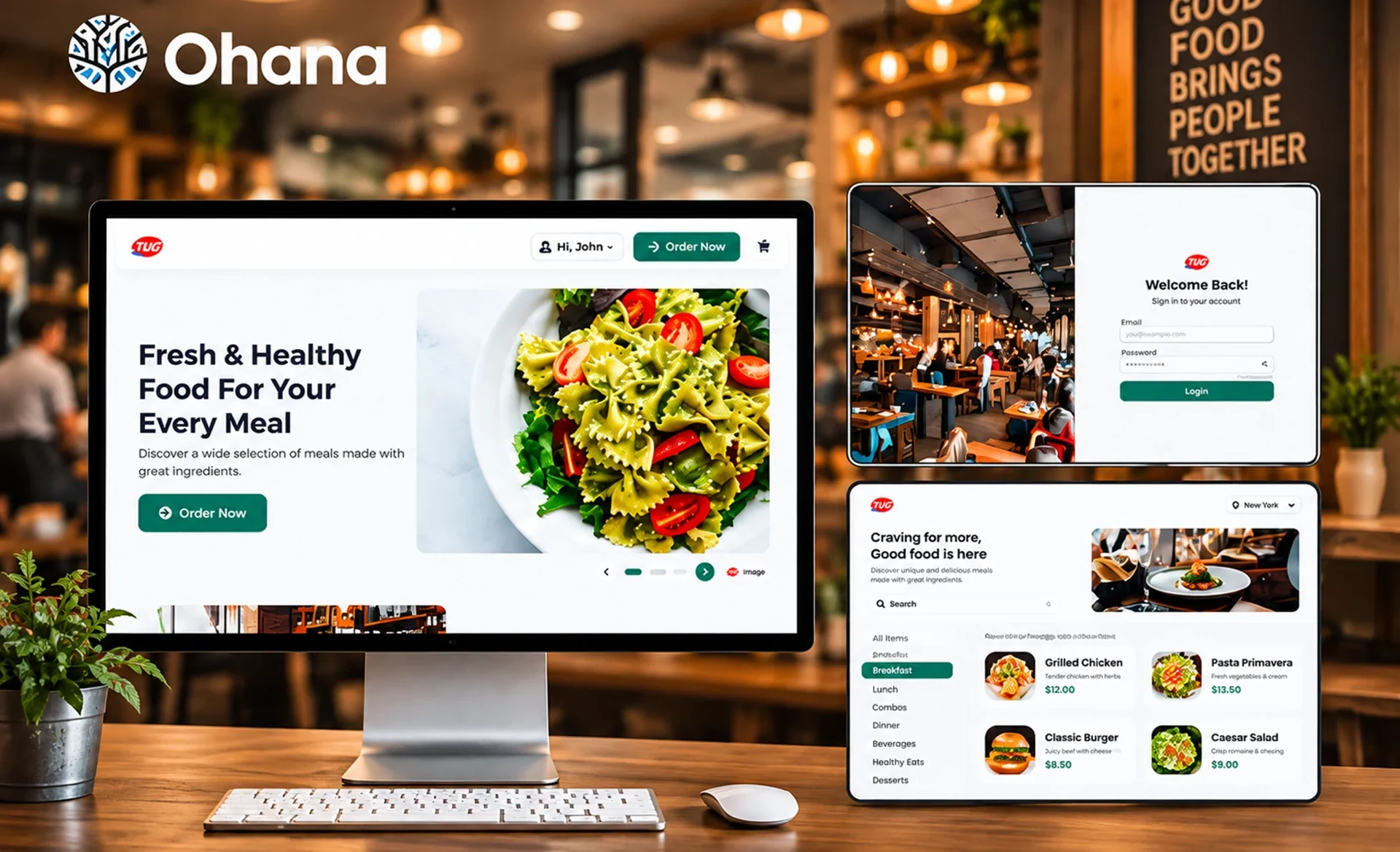
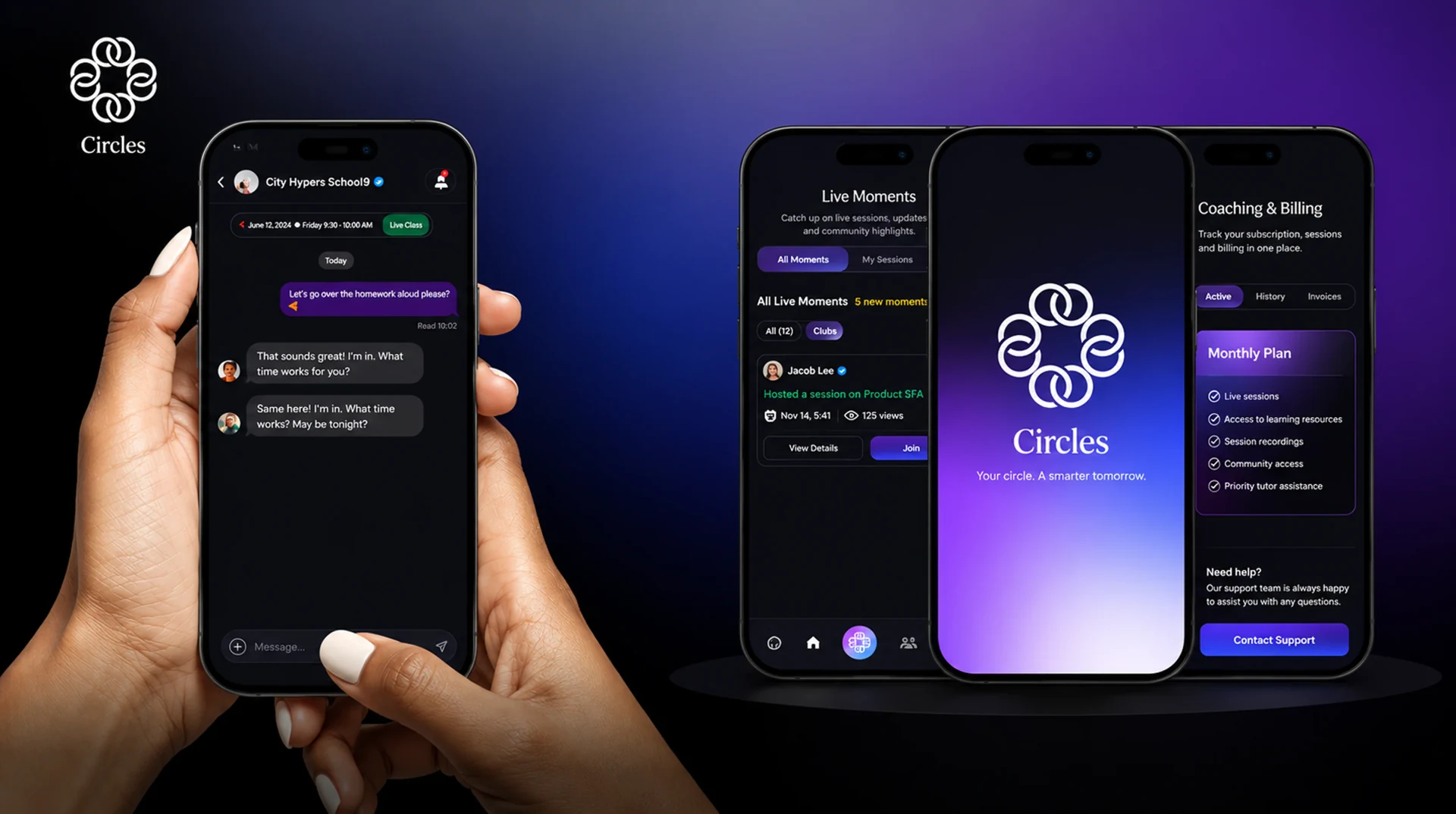
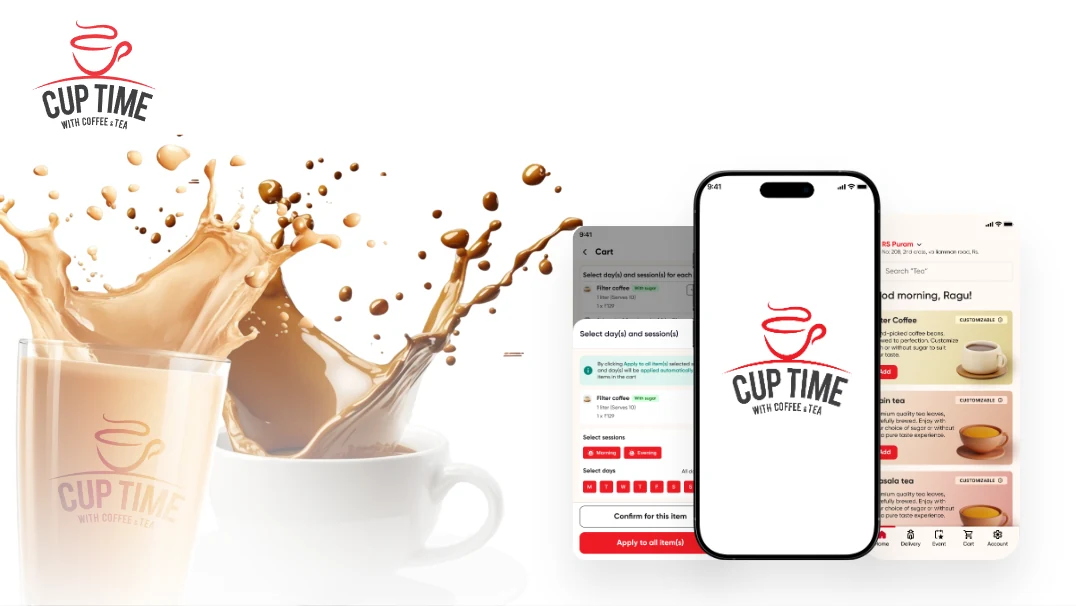
The projects below represent actual Noukha engagements. Client names are withheld at their request. Outcomes are real.
Mobile App Development Pricing for California Businesses
Bay Area and LA agencies typically charge $150 to $250 per hour for senior engineering. Noukha delivers the same technical depth at $25 to $50 per hour — pricing a typical California app project at a fraction of local agency rates, with CCPA compliance and investor due diligence documentation included as standard deliverables.
California Starter App
10 to 14 weeks · Single platform
California Growth App
16 to 32 weeks · iOS + Android
California Enterprise Platform
24 to 40 weeks · Dedicated squad
Mobile App Development in the USA
Overview of our US mobile development services
iOS App Development Company in the USA
Native iOS engineering for US businesses
Flutter App Development Company in the USA
Cross-platform Flutter development for US clients
Mobile App Development Company in Texas
Our services for Texas businesses
Frequently Asked Questions About Mobile App Development in California
The questions California businesses ask most before starting a mobile app project. Still have something specific in mind? Reach out — we respond within one US business day.
Let's Build Something Great Together
- Free 30-minute consultation call — no sales pressure
- Detailed, itemised project quotation within 48 hours
- No lock-in commitments or upfront fees
Meet Your California Project Engineering Team
Every mobile app we ship for California clients is built by the same people you speak to during your project — developers, designers, and product strategists. We don't outsource any part of the development process.
Our mobile engineers work across Android, iOS, Flutter, and React Native every day. From Bay Area investor-ready MVPs to LA entertainment platforms to San Diego HIPAA-compliant biotech apps — we have built across the full California market.
Why Choose A Custom Mobile App Over An Off-the-Shelf Solution?
Generic app templates are built to satisfy the average use case. Your California business isn't average. A custom mobile app is built around your specific workflows, your CCPA/CPRA compliance requirements, and your growth goals — and with Noukha you own every line of it.
Let’s Build Something Great Together
Looking to build a custom software solution, AI product, or digital platform? Use the form below to tell us about your project. Our team will respond within one business day.
Please share a few details. A team member will get back to you within one business day.
From our offices in the UK, India, and Canada, we work with clients across borders to deliver reliable software solutions.