Home > Services > AI Development Company in Canada
AIDevelopmentCompanyinCanadaforProduction-GradeAISystems
Canada has invested more deliberately in artificial intelligence research infrastructure than almost any country of comparable size. The Pan-Canadian AI Strategy funded three world-class AI institutes: the Vector Institute in Toronto, Mila in Montreal, and Amii in Edmonton. That research depth has created commercial expectations that businesses bringing AI products to Canadian buyers must meet.
Noukha Technologies builds production-grade AI systems for Canadian businesses: LLM-powered applications, machine learning integrations, AI-augmented business workflows, and intelligent data systems designed for Canada's specific regulatory environment (PIPEDA, Quebec Law 25, Bill C-27/AIDA, OSFI, and Federal AIAs).

Recognized. Respected. Relied Upon.
Our listings on Clutch, GoodFirms, and RightFirms are backed by verified client interviews. Canadian enterprise AI buyers evaluating development partners use these platforms to verify our technical execution and compliance delivery.




Why Canada Is a World-Leading AI Research & Commercial Hub
Canada is not one uniform AI market. It spans four distinct regional ecosystems — each with specialized industry demands, provincial data governance rules, and technical standards.
World-Class AI Institutes
Vector (Toronto), Mila (Montreal), Amii (Edmonton)
Pan-Canadian AI Strategy
Federal investment funding national research
PIPEDA & Law 25 Ready
Full compliance with federal & Quebec privacy law
Max SR&ED Tax Savings
Stackable federal & provincial R&D credits
Understanding Canada's Four Major AI Technology Ecosystems
Building a production AI system for a Canadian organization requires understanding local market expectations: Bay Street financial rigor in Toronto, Law 25 compliance in Montreal, energy sector analytics in Calgary, and federal AIAs in Ottawa.
Toronto & GTA — Financial & Enterprise AI Leadership
Home to the Vector Institute and Bay Street financial institutions. AI development here is dominated by OSFI model risk management requirements, high-throughput credit decisioning, fraud detection engines, and clinical healthcare systems governed by Ontario’s PHIPA.
Building for Canada's AI Regulatory Framework
Canada combines federal privacy laws, GDPR-grade provincial law in Quebec, and federal AI directives. We design compliance into data pipelines, consent mechanisms, and model architectures from day one.
PIPEDA Federal Privacy & Data Minimization
Personal Information Protection and Electronic Documents Act governs private-sector AI data handling across Canada. AI architectures enforce strict data minimization during model training/inference, meaningful consent mechanisms, and user access/correction capabilities.
Quebec Law 25 Privacy Impact Assessment (PIA)
Law 25 mandates formal Privacy Impact Assessments before deploying AI systems handling Quebec personal data. Requires unbundled consent for automated profiling, automated decision notification rights, and 72-hour CAI breach reporting.
Bill C-27 & Artificial Intelligence & Data Act (AIDA)
Canada’s emerging federal AI legislation signals mandatory impact assessments for high-impact AI systems, bias detection and mitigation standards, human oversight protocols, and heavy non-compliance penalties.
Directive on Automated Decision-Making (Federal AI)
Applies to federal institutions using automated systems for administrative decisions. Requires impact classification (Impact Levels 1 to 4), Algorithm Impact Assessments (AIA), and human decision-maker review for consequential outcomes.
Need help navigating PIPEDA data minimization, Law 25 PIAs, or federal AIA requirements for your AI product?
Our Canadian regulatory architects scope your compliance needs before engineering starts.
AI Development Services For Canadian Businesses
From LLM application development and machine learning pipelines to Law 25 PIAs and bilingual French/English NLP — end-to-end engineering for Canadian clients.
LLM Integration & Generative AI for Canadian Enterprises
We build production LLM applications with PIPEDA-compliant data handling, Law 25 consent architecture, and Canadian data residency options (AWS Central, Azure Canada, GCP Montreal/Toronto). Covers model evaluation, prompt engineering, and document RAG.
Machine Learning Model Development & Integration
Custom ML models designed for sectors where domain-specific models outperform general LLMs: fraud detection for Canadian financial institutions, predictive maintenance for energy operations, and clinical risk scoring for Canadian healthcare.
AI-Integrated Business Software Workflows
Integrating intelligent capabilities into existing business software: structured document extraction from Canadian tax forms and regulatory filings, automated customer request classification, and risk signal forecasting.
Bilingual AI Systems for Canadian Markets
French-language prompt engineering, dual-language model performance evaluation, bilingual knowledge bases for RAG systems, and user interfaces meeting Official Languages Act standards for federal organizations.
AI Data Infrastructure & Data Pipeline Engineering
Data pipelines that normalize and version training/inference data, feature stores for reproducible models, data drift monitoring, and data lineage tracking required to satisfy Canadian regulatory audits.
AI Governance & Compliance Documentation
Deliverable technical documentation produced during development: Model Cards (behavior & limitations), Data Sheets (provenance), Privacy Impact Assessments (Law 25), and Algorithm Impact Assessments (Federal AIA).
AI Applications Built for Canada's Key Industry Sectors
Canada's key commercial sectors — financial services, energy, healthcare, public sector, legal, and media — require domain-specific model architectures and regulatory alignment.
Built under OSFI (Office of the Superintendent of Financial Institutions) guidance on model risk management. Covers credit decisioning, fraud detection, customer service automation, and regulatory reporting while adhering strictly to PIPEDA privacy rules.
Predictive maintenance of upstream and midstream assets, production optimization models, safety incident prediction, and environmental compliance monitoring under Alberta’s Petroleum and Natural Gas Act and EPEA.
Clinical documentation assistance, diagnostic support tools, patient engagement platforms compliant with PHIPA (Ontario), HIA (Alberta), and Quebec health privacy rules, built using CIHI population-scale data linkage.
Directive on Automated Decision-Making compliance, impact level classification justification, Algorithm Impact Assessment (AIA) generation, and human oversight mechanisms built into administrative workflow tools.
Document review, contract analysis, and compliance monitoring designed with Law Society guidelines regarding lawyer responsibility for AI outputs, Law 25 Quebec rules, and PIPEDA personal information protection.
Bilingual recommendation engines, CASL anti-spam compliant marketing automation, and CRTC-aligned Canadian content recommendation algorithms for digital media platforms.
Why Canadian Businesses Partner with Noukha for AI Development
Canadian regulatory fluency, Law 25 Privacy Impact Assessments, bilingual capabilities, and SR&ED documentation support are built into our delivery model.
Canadian Regulatory Framework Fluency
We understand PIPEDA, Quebec Law 25, provincial health information acts (PHIPA/HIA), OSFI model risk guidance, and federal AIAs at the technical level required to implement compliance during architecture design.
Law 25 PIA & Federal AIA as Standard Deliverables
For AI systems processing Quebec personal data or federal government use, we produce Law 25 Privacy Impact Assessments and Algorithm Impact Assessments as part of the core project scope.
Bilingual Capability for Quebec & Federal Markets
Bilingual AI systems require French prompt engineering, French model output evaluation, and French knowledge bases. We treat French performance with equal rigor as English, not as an afterthought.
Multi-Timezone Coverage Across All Canadian Zones
Sprint reviews and communication are scheduled to fit Canadian business hours across Pacific (PST), Mountain (MST), Eastern (EST), Atlantic (AST), and Newfoundland (NST) time zones.
Operating across Pacific (PST), Mountain (MST), and Eastern (EST) Canadian business hours.
Senior AI engineering at CAD $35–$65/hr vs local firm rates of CAD $150–$250/hr. Qualifying R&D work eligible for up to 35-50% SR&ED tax credits.
Our AI Development Process for Canadian Clients
Every Canadian engagement follows a structured 5-phase process that builds regulatory compliance and evaluation metrics into sprint deliverables.
Canadian Regulatory Context Assessment
Deliverables: Compliance requirements register, PIPEDA/Law 25 scope map, Canadian CAD cost breakdown
Every Canadian engagement begins by identifying applicable privacy laws (PIPEDA, Law 25, PHIPA/HIA), sector guidance (OSFI, Directive on Automated Decision-Making), and bilingual requirements before development.
Use Case Validation & Data Governance
Deliverables: Use case validation report, data custodian agreement structure, data residency blueprint
We validate the target use case against Canadian data accessibility constraints, verify data custodian agreements for healthcare, and establish data residency requirements (AWS Central, Azure Canada, GCP).
Architecture Design With Built-In Compliance
Deliverables: Technical architecture document, Law 25 PIA framework, golden dataset & evaluation rubric
PIPEDA data minimization, Law 25 Privacy Impact Assessment documentation, automated decision disclosure, and audit logging are designed into the technical architecture before engineering starts.
Iterative Sprint Development & Multi-Timezone Cadence
Deliverables: Two-week sprint builds distributed via TestFlight/Firebase, sprint reviews in client time zone
Two-week sprint cycles with builds distributed for testing. Sprint reviews are scheduled during client business hours from Vancouver (PST) to Toronto (EST), with experiment tracking against evaluation metrics.
Compliance Deliverables & Production Launch
Deliverables: Model cards, data sheets, Law 25 PIA & Federal AIA package, production deployment
Final model cards, training data sheets, Law 25 PIA, and federal AIA documentation are delivered alongside production code, backed by post-launch monitoring and drift detection.
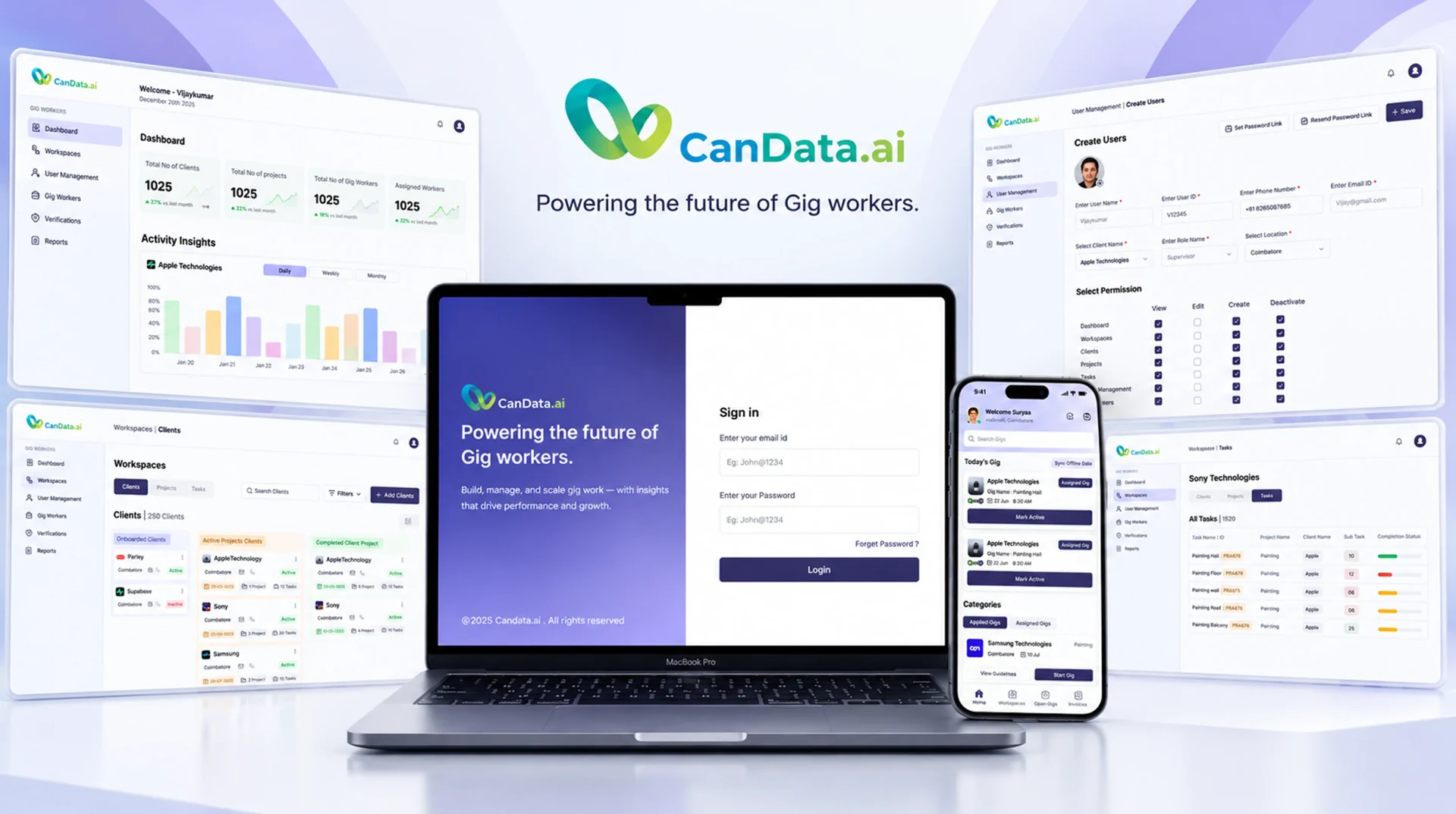
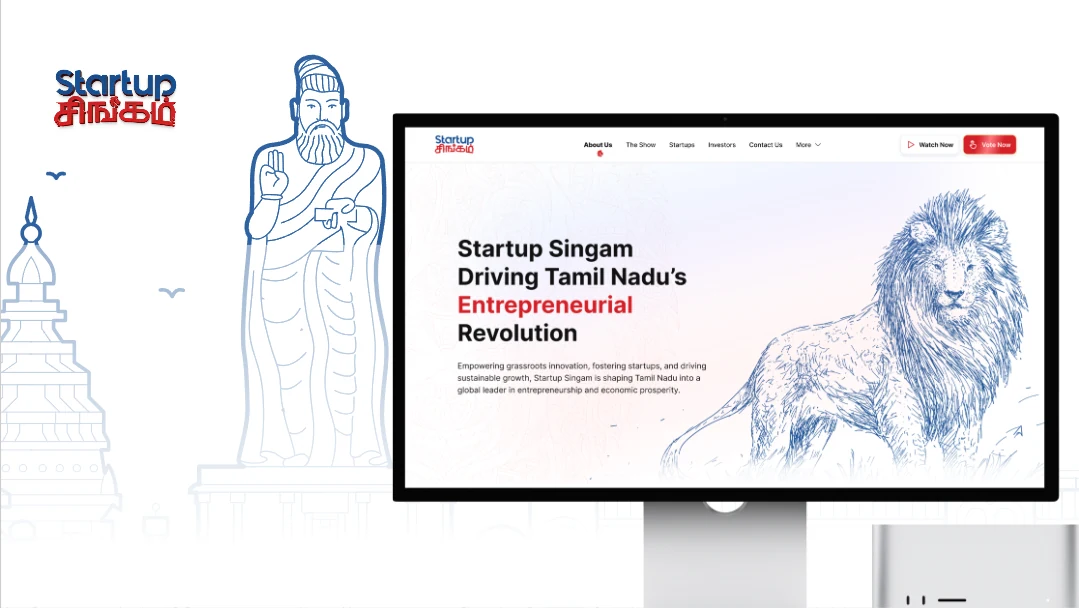
Our Work - Digital Solutions Built for Scale
From SaaS platforms and AI automation to complex web apps - discover how we help startups and enterprises automate, innovate, and grow.




AI Development Cost in Canada
Transparent project scope and CAD pricing ranges for Canadian organizations. All engagements include PIPEDA compliance, evaluation rubrics, and technical documentation.
Canadian Document AI
10 to 16 weeks · RAG & PIPEDA
Quebec & Federal Enterprise
16 to 24 weeks · French & English
OSFI Financial / PHIPA Health / Federal AIA
20 to 32 weeks · Regulated Enterprise
Every project starts with a free discovery call and a written proposal. You see the full regulatory breakdown and deliverables before signing anything.
Generative AI Development in the USA
Our generative AI practice for US enterprises
AI Agent Development Company in the USA
Autonomous, tool-using AI agents for production workflows
Custom Software Development in the USA
Enterprise software engineering for US businesses
Mobile App Development in the USA
Native and cross-platform mobile apps
Frequently Asked Questions About AI Development in Canada
The questions Canadian businesses ask most before starting an AI development project. Still have something specific in mind? Reach out — we respond within one business day.
START YOUR CANADIAN AI PROJECT
- Free 30-minute discovery call — no sales pressure
- Detailed, itemised project quotation within 48 hours
- No lock-in commitments or upfront fees
Let’s Build Something Great Together
Looking to build a custom software solution, AI product, or digital platform? Use the form below to tell us about your project. Our team will respond within one business day.
Please share a few details. A team member will get back to you within one business day.
From our offices in the UK, India, and Canada, we work with clients across borders to deliver reliable software solutions.