Home > Services > AI Agent Development > USA
AI Agent Development
Company in USA
The distinction between a chatbot and an AI agent is not marketing language. It is an architectural distinction with real consequences for what the system can accomplish. A chatbot responds. An AI agent reasons, decides which tools to use, executes actions across connected systems, evaluates the results, and proceeds to the next step without a human initiating each action.
Noukha is an AI agent development company in USA that designs and builds autonomous AI agents for US enterprises that need more than conversational AI -- agents that operate within defined business workflows, use tools reliably, recover from failures predictably, and include the human oversight mechanisms that production deployments require.
Delivered projects
Successfully Delivered Projects
Positive reviews
Satisfied Customers
Senior Talents
High-Class Specialists
Clutch Rated
Top-Rated Service Provider
Built for production, not demonstrations.
Most agent projects work in a controlled demo and fail in the field. We engineer for the failure modes before they happen.
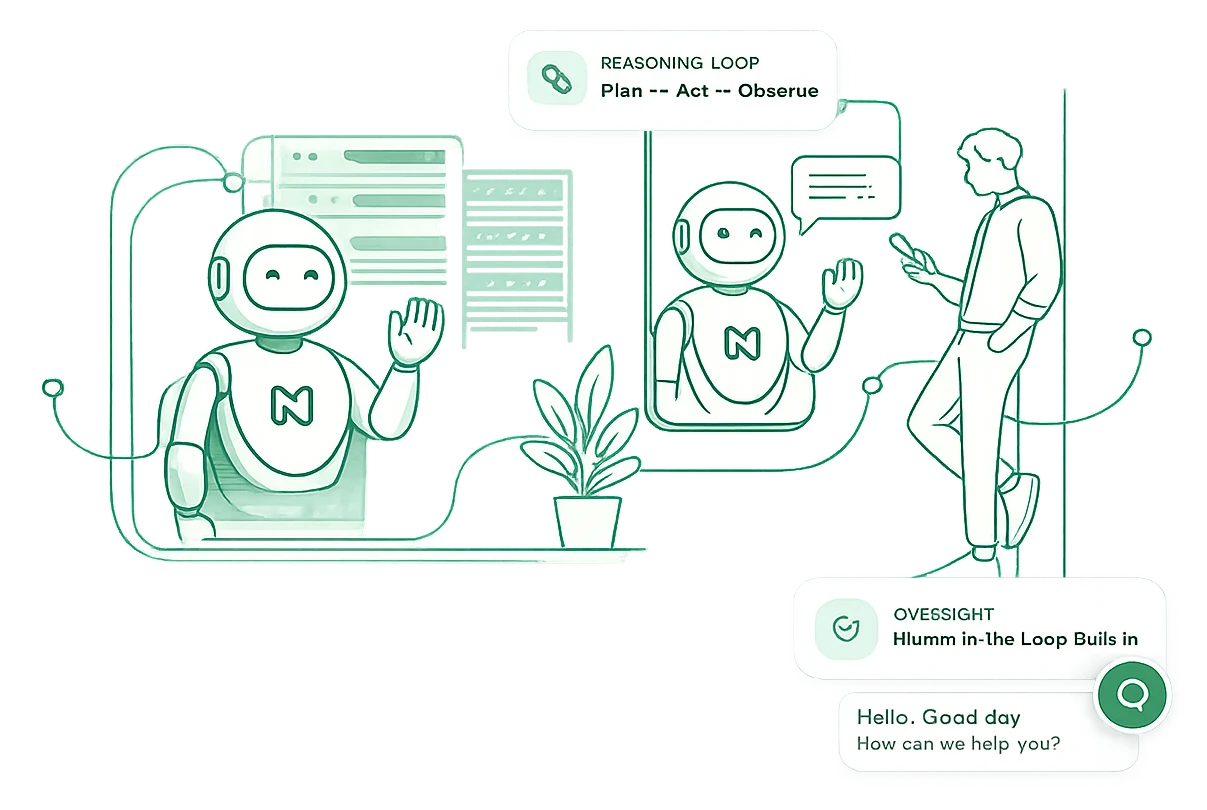
We pair the plan-act-observe reasoning loop with tool design, permission scoping, and human oversight mechanisms designed as product features -- so the agent you launch is reliable, auditable, and ready for real workflows on day one.
The plan-act-observe loop
The architectural property that lets agents handle variable inputs and intermediate failures the way fixed automation cannot.
Human-in-the-loop by design
Approval gates, confidence-threshold routing, and escalation paths engineered as product features, not safety add-ons.
Failure mode coverage as a deliverable
Every engagement includes explicit engineering responses to the failure modes that break agents in production.
What Distinguishes an AI Agent From Automation, RPA & Chatbots
The key architectural property that makes a system an agent rather than an automation or a chatbot is the plan-act-observe loop: the agent forms a plan, takes an action, observes the result, and uses that observation to decide the next action -- repeating across multiple steps before the task is complete.
| System Type | What It Can Handle | What It Cannot Handle |
|---|---|---|
| Rule-based automation | Highly predictable, structured processes with stable inputs | Variable inputs, exceptions that do not match defined rules, judgment calls |
| RPA (Robotic Process Automation) | Legacy system integration without APIs, repetitive data entry, UI-based workflows | Unstructured inputs, dynamic decisions, processes that change structure based on context |
| Conversational chatbot (non-agentic) | Single-turn and multi-turn Q&A, information retrieval, guided form collection | Taking actions in external systems, multi-step task execution, operating without human input at each step |
| AI Agent | Multi-step task execution across connected systems, variable input handling, context-dependent decisions within scope | Open-ended tasks with no success criteria, irreversible actions without human review, tasks where required tools are unavailable |
Patterns That Determine What an Agent Can Do
The architecture pattern chosen for an AI agent determines its capability ceiling, its failure modes, and the engineering complexity required to make it reliable in production.
How Agents Interact With Business Systems
An AI agent is only as useful as the tools it can call. Tool design is one of the most consequential -- and most commonly underspecified -- engineering decisions in agent development.
Tools Designed for Model Comprehension
We write tool names, descriptions, and error messages for the language model's tool-selection behavior, not human documentation standards.
Four Tool Categories, Built to Spec
Information retrieval, action, computation, and coordination tools -- each with different error handling and rollback considerations.
Least-Privilege Permission Scoping
Every tool is authorized only for the specific operations the agent requires, not the full scope of the underlying API.
Graceful Error Handling
Retry logic with exponential backoff, timeout handling, and structured error messages so the reasoning loop gets actionable feedback.
MCP-Standardized Integration
We build to the Model Context Protocol where supported, and build MCP servers for internal tools not in the public ecosystem.
Governable for Regulated Industries
MCP servers can be deployed within the enterprise network boundary, so tool calls do not require data to leave your infrastructure.
Failure Modes We Engineer Against
AI agents fail in ways traditional software does not. Understanding these failure modes before designing the system is what separates production-viable deployments from demonstrations.
| Failure Mode | What Causes It | Engineering Solution |
|---|---|---|
| Tool selection error | Ambiguous tool descriptions; overlapping tool capabilities | Precise tool naming; non-overlapping capability descriptions; tool selection unit tests |
| Reasoning loop stall | Agent unable to make progress after multiple steps | Maximum step limit with graceful termination; loop detection; replanning trigger |
| Hallucinated tool arguments | Model generates plausible-looking but incorrect argument values | Argument validation at the tool layer; schema enforcement with function calling |
| Context window overflow | Long multi-step tasks exceed the model context window | Conversation summarization; tool result compression; sliding window management |
| Compounding error propagation | An error in an early step produces an incorrect state later | Checkpointing of intermediate state; validation before proceeding; rollback on failure |
| Over-permission tool use | Agent takes an action that should have required approval | Human approval gates for high-impact actions; action logging; minimum-scope permissions |
| Silent failure from exceptions | Tool throws an uncaught exception; agent continues on bad state | Explicit error types in tool responses; reasoning prompt instructs error handling |
Human-in-the-Loop Design for Production Agents
Full autonomy is not the right design for most production deployments. The question is not whether to include human oversight, but where to position it.
Approval Gates for High-Stakes Actions
Actions that are irreversible, financially consequential, or affect external stakeholders require explicit human approval, designed as first-class tools in the agent's tool set.
Confidence-Threshold Routing
When the agent's confidence score falls below a defined threshold, the task routes to human review rather than being accepted automatically.
Audit Logging & Action Attribution
Every action is logged with its reasoning trace, tool call arguments, tool response, and timestamp -- a required deliverable, not an option.
Escalation Design
Agents have a defined escalation path for tasks outside their capability boundary, passing full context so a human can complete the task without starting over.
AI Agent Development Services
From a bounded single-agent workflow to a fully observable, multi-agent production system.
Single-Agent Workflow Automation
The right starting point for most production deployments -- simpler to debug, easier to evaluate, and more predictable than multi-agent systems.
Multi-Agent System Design & Engineering
Orchestrator design, specialist subagent development, inter-agent communication protocols, and coordination logic for handoffs and partial failures.
Enterprise System Integration
Salesforce, HubSpot, ServiceNow, Jira, Microsoft 365, Google Workspace, Slack, Teams, custom ERP through REST/GraphQL -- built to the MCP standard where applicable.
AI Agent Evaluation & Quality Engineering
Evaluation frameworks measuring task completion rate, step efficiency, tool selection accuracy, and output quality -- built before development, not after.
Agent Observability Infrastructure
Full reasoning traces, tool call latency and error rates, task completion rate by category, step count distributions, and token usage per task.
Human-in-the-Loop Workflow Engineering
Approval gate interfaces, escalation notification workflows, and confidence-threshold routing logic, treated as a product design problem.
Our AI Technology Stack
We use modern tools and models to build secure, robust, and highly scalable applications.
AI Agent Use Cases for US Enterprise Operations
Real workflow categories where agents operating across connected systems produce consistent results faster than manual execution.
Sales & Revenue Operations
Lead enrichment, CRM record updates from call transcripts, follow-up drafting, meeting scheduling, and pipeline reporting.
Customer Support Resolution
Tier-one resolution: order status, account configuration, billing adjustments within policy limits, escalating outside defined scope.
Legal & Contract Review
Extracts terms, flags non-standard clauses against a playbook, and generates redline summaries for attorney review.
IT Operations & Incident Response
Diagnoses incidents against runbooks, executes defined remediation, and escalates patterns that don't match known playbooks.
Research & Competitive Intelligence
Tracks news, SEC filings, and patent databases, writing structured summaries to a knowledge base on a recurring schedule.
Finance & Procurement Operations
Invoice processing, expense report validation, and procurement request handling within explicit authorization boundaries.
When One Agent Is Not Enough
Multi-agent architectures add significant engineering complexity. The decision should be based on specific constraints a single agent cannot address.
When It Is Justified
Context window limits, task specialization requiring conflicting tool sets, achievable parallelism, or reliability via cross-checking.
Orchestrator-Subagent Pattern
A planning agent decomposes tasks, delegates to specialists, evaluates results, and retries failed sub-tasks with modified instructions.
Shared Memory & State
Structured, typed, queryable state objects -- not raw conversation histories -- so context consumption stays low and state stays inspectable.
Three-Level Testing
Unit testing of subagents, integration testing of orchestrator handoffs, and end-to-end testing against a golden task set before every deployment.
Our AI Agent Development Process
AI agent development has different risks from standard software development. Our process surfaces agent-specific risks early: scope boundary ambiguity, tool reliability, and failure mode coverage.
Agent Readiness Assessment
We assess task definition clarity, tool availability, failure tolerance, human oversight requirements, and data access before recommending an agentic approach.
Tool Inventory & Integration Architecture
We document every tool the agent requires -- the system, operations, authentication model, response format, and error states -- before any tool development begins.
Agent Design & Prompt Architecture
System prompt structure, ReAct or planning pattern, context management strategy, and human-in-the-loop insertion points are reviewed before implementation starts.
Tool Development & Integration Testing
Each tool is built and unit tested against the happy path, error states, and edge cases, validating tool selection behavior in isolation first.
Agent Integration, Evaluation & Hardening
Tools, the reasoning loop, and human-in-the-loop design combine into the full system, evaluated against a golden task set and hardened for step limits, loops, and load.
Deployment & Post-Launch Monitoring
We deploy to production and track task completion rates, tool error rates, and escalation rates, refining scope through systematic failure analysis.
Why Choose Noukha as Your AI Agent Development Company in USA
We build a smaller set of well-designed agent deployments rather than a larger set of partial deployments that never reach production.
Agent Readiness Assessment First
We identify workflows that are poor agent candidates before engineering investment is made, not after.
Tool Design for Model Comprehension
Tool names, descriptions, and errors are written for the model's selection behavior, tested before integration.
Failure Mode Coverage as a Deliverable
Tool errors, loop stalls, hallucinated arguments, context overflow, and over-permission actions -- each with a defined response.
Human-in-the-Loop as a Product Problem
Approval gates and escalations designed for the reviewer's experience -- oversight mechanisms that are used, not bypassed.
MCP-First Integration Architecture
Governable, interoperable tool integrations that expand without rebuilding the agent's core integration layer.
What We Have Built — and What It Delivered
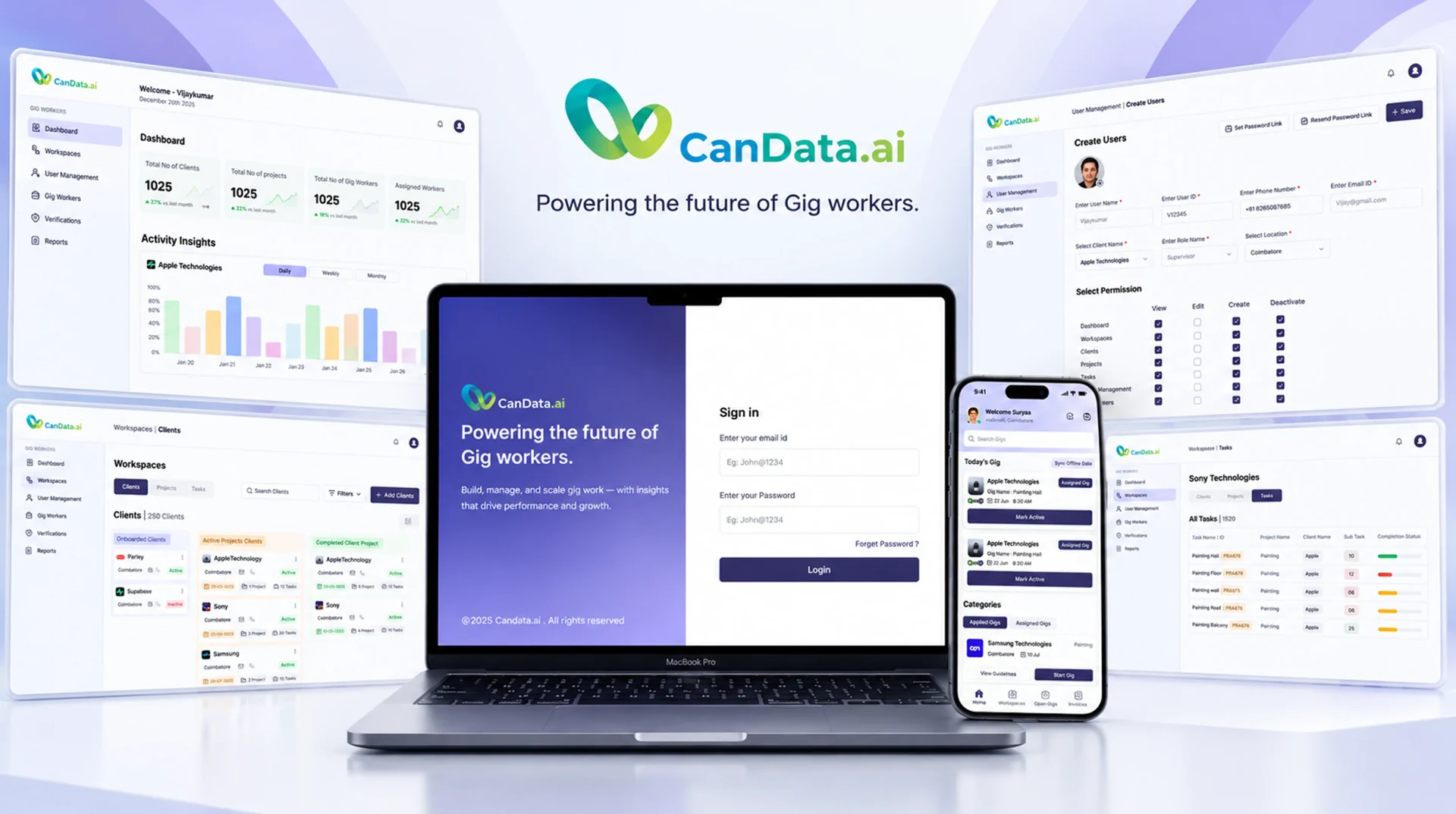
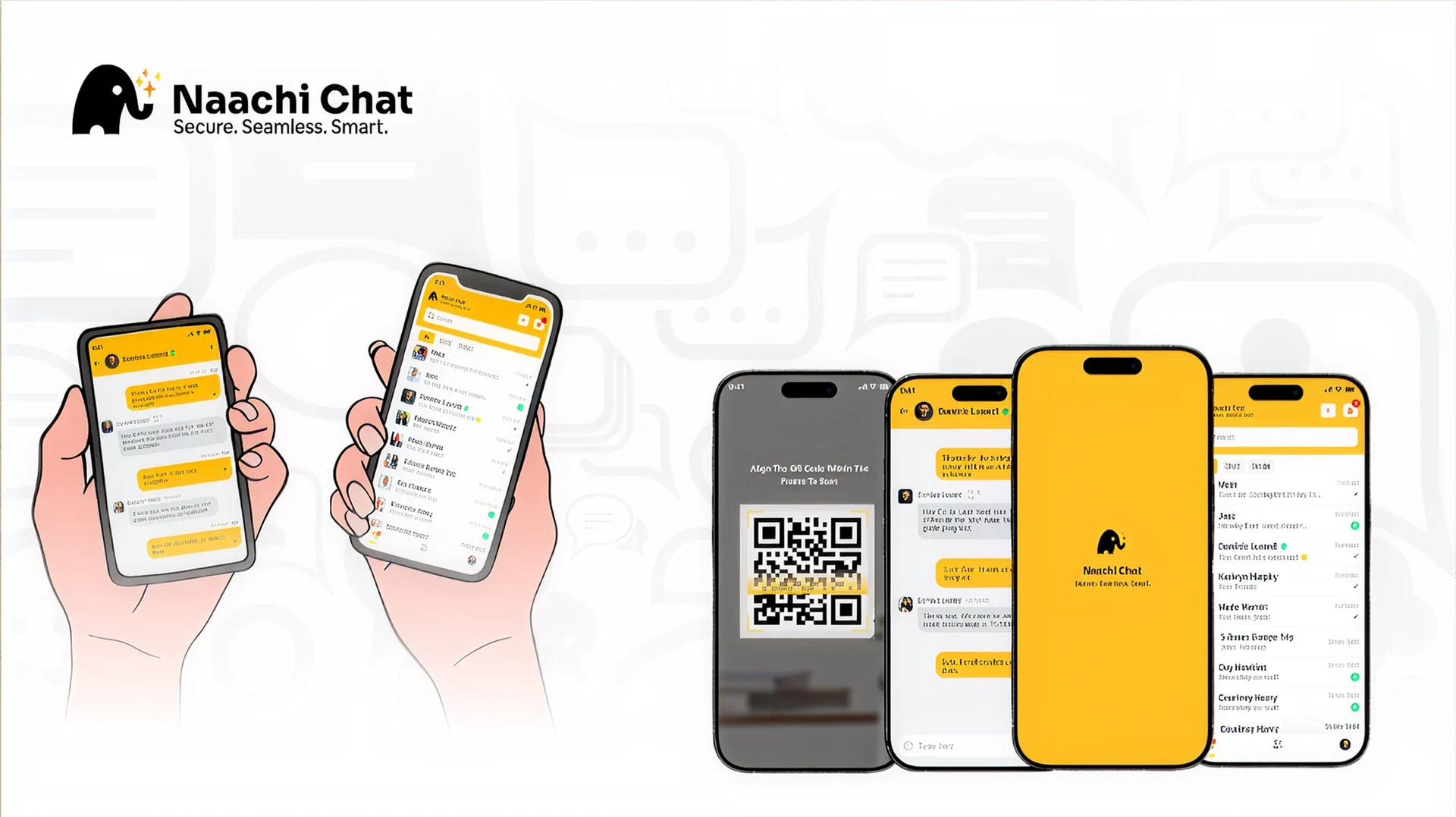
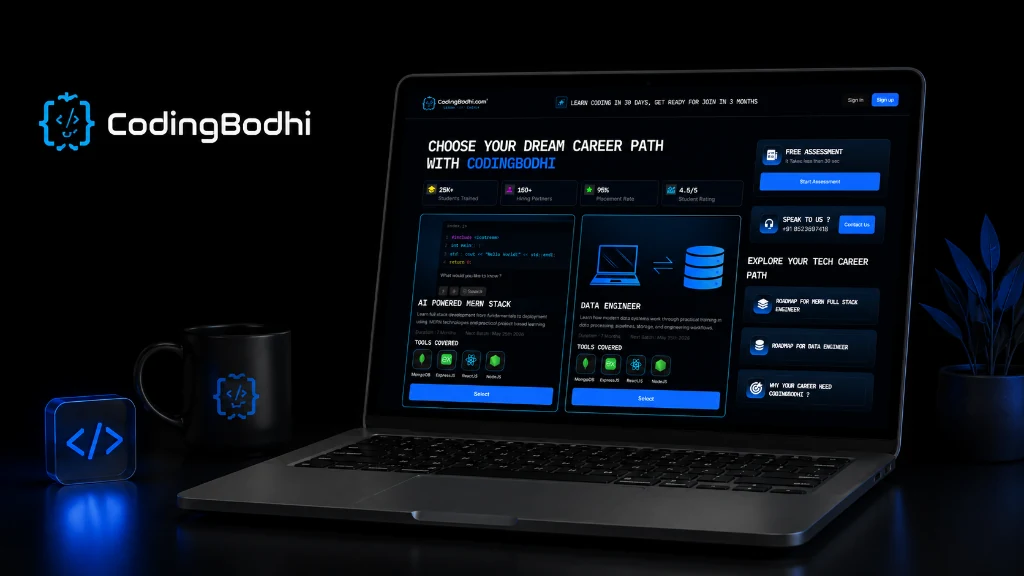
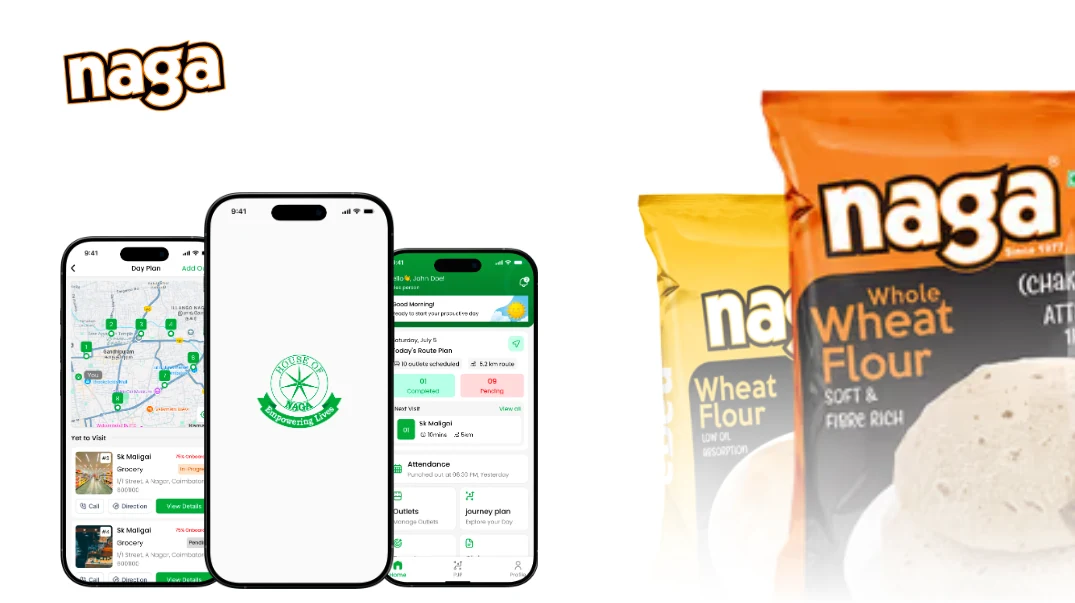
The projects below represent actual Noukha engagements. Client names are withheld at their request. Outcomes are real.
AI Agent Development Cost: What Drives It
A focused single-agent deployment typically takes 8 to 14 weeks. A multi-agent system with enterprise integrations typically takes 16 to 28 weeks. Timelines and cost are produced from a tool inventory, not general estimates.
Workflow scope & tool count
The number of distinct tools and the complexity of each integration are the primary cost drivers.
Human-in-the-loop complexity
Approval gates, escalation workflows, and confidence routing each require product design beyond core agent logic.
Enterprise integration depth
Legacy systems and poorly documented APIs are frequently the largest source of schedule uncertainty.
Evaluation & golden dataset
Building a representative golden task set requires domain knowledge and time the functional build does not.
Multi-agent vs single-agent
Orchestrator design, subagent development, and shared state management add testing complexity single agents avoid.
Straight from the Clients Who Worked with Us
These are not pulled quotes from a curated highlights reel. They are representative of the feedback pattern we receive consistently across projects -- particularly around communication, technical quality, and delivery reliability.
START WITH AN AGENT READINESS ASSESSMENT
- Free 30-minute consultation call — no sales pressure
- Detailed, itemised project quotation within 48 hours
- No lock-in commitments or upfront fees
Frequently Asked Questions
Common questions US businesses ask us before starting an AI agent development project.
Let’s Build Something Great Together
Looking to build a custom software solution, AI product, or digital platform? Use the form below to tell us about your project. Our team will respond within one business day.
Please share a few details. A team member will get back to you within one business day.
From our offices in the UK, India, and Canada, we work with clients across borders to deliver reliable software solutions.