Services / Web App Development Company in USA
Web App Development Company in USA
Businesses that outgrow spreadsheets, fragmented SaaS tools, or legacy systems need more than another subscription. They need a web application built around how they actually operate. Noukha is a web app development company in the USA that designs and engineers custom web applications for startups, growing companies, and enterprises that require software shaped precisely around their processes, users, and integrations.
From SaaS platforms and customer portals to internal workflow tools and enterprise dashboards, we deliver web applications built for production performance, not demo conditions.
See our related services: Enterprise Software Development Company in USA, Mobile App Development Company in USA, AI App Development Company in USA, Custom Software Development Company in USA, and Generative AI Development Company in USA
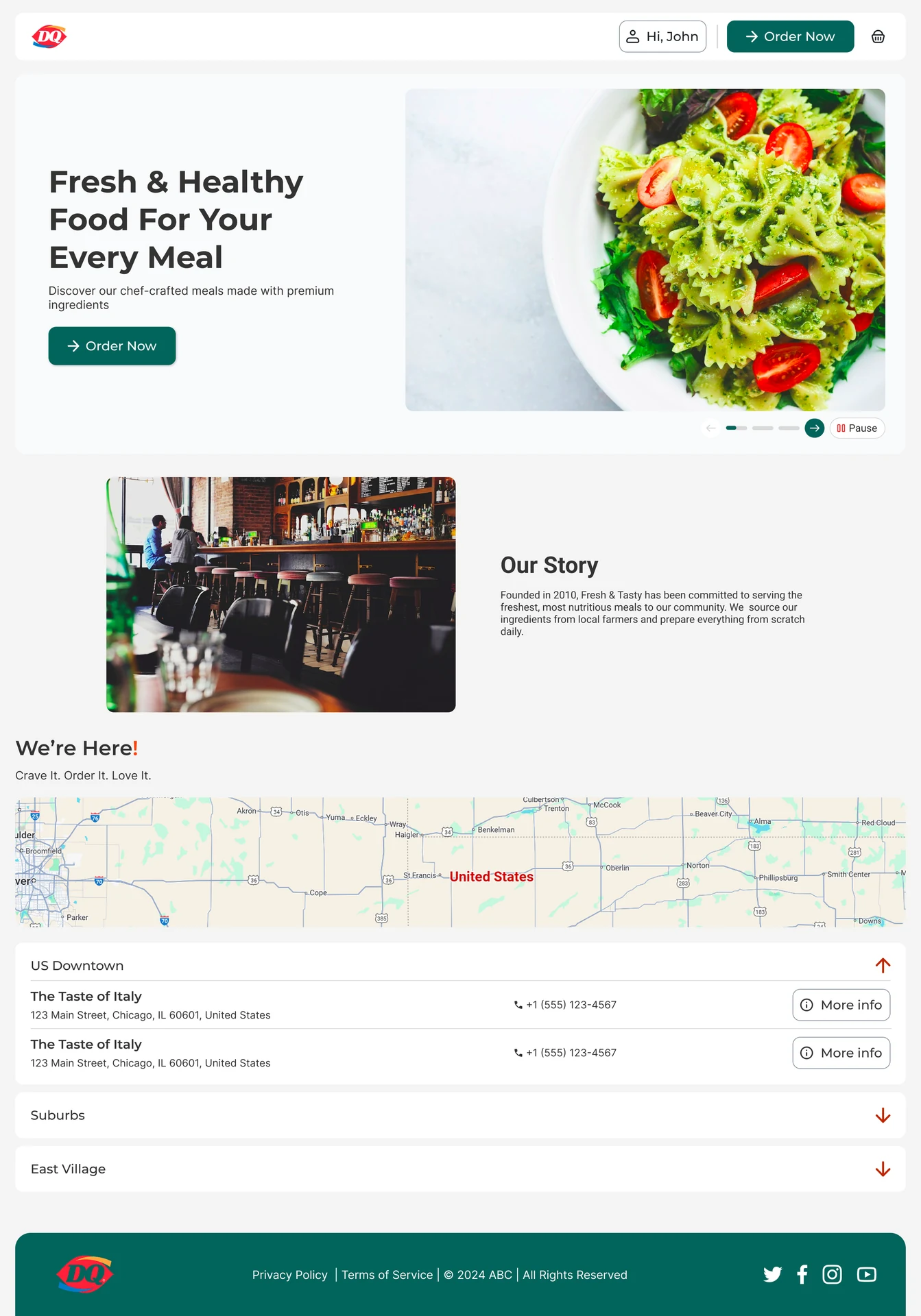
When custom web app development
is the right choice
You need a web app built around your workflows, not adapted from a template
Your current tools cannot support the integrations or scale your business requires
You are building a product where you need full codebase and data ownership
Compliance or data handling requirements rule out off-the-shelf SaaS products
You want a partner who covers design, engineering, integrations, and support
Our Web App Development Services in the USA
Noukha provides end-to-end web application development, from product discovery and UX design to engineering, integrations, cloud deployment, and support.
Custom web applications are designed around your specific users, data models, and workflows. We build from a documented specification produced during discovery, not from a template adapted to approximate your requirements.
Building a software-as-a-service product requires product strategy alongside engineering execution. We address multi-tenancy architecture from the start, covering isolated tenant data and subscription billing integration.
Enterprise web applications operate across organizational departments, integrate with existing systems, and require role-based access, audit logging, and security architecture that standard tools do not provide.
PWAs deliver app-like experiences through the browser, including offline capability, push notifications, and installability on mobile home screens, without requiring a separate native build.
Most production web applications require integrations with external systems. We map integration requirements during discovery, test the relevant APIs, and build integration layers with proper error handling.
Aging web applications create compounding problems. We handle modernization through API wrapping, strangler fig migration, and full rebuilds where the codebase cannot be extended at reasonable cost.
Business web applications fail adoption when the interface does not match the mental model of the people using it. We design workflows that map to how users actually accomplish tasks.
Framework updates, security patches, browser compatibility changes, and performance degradation do not pause at delivery. We offer structured support agreements with defined SLA tiers.
Web Applications We Build
The product types below reflect what Noukha builds regularly, along with the functional requirements and architecture considerations that distinguish each category.
SaaS Platforms
Multi-tenant SaaS platforms require architecture decisions from the start that determine how tenant data is isolated, how subscriptions gate feature access, and how the platform handles onboarding for new accounts without engineering involvement. Common product types include B2B workflow tools, vertical SaaS for specific industries, and white-label platforms for organizations that resell the product to their own clients.
Customer and Client Portals
Customer portals give clients, vendors, or partners direct access to the information and actions relevant to them, reducing the support and coordination overhead on internal teams. Key technical requirements include role-based access control, secure document handling, real-time data sync with core business systems, audit logging, and notification workflows. Portals built on poorly designed API layers generate more support requests than they reduce.
Internal Workflow Tools
Internal tools built specifically for how a team works outperform generic alternatives in adoption, speed, and long-term maintenance cost. Whether it is a custom CRM, an inventory management system, or an automated reporting pipeline, these applications focus on operational efficiency. We ensure they integrate seamlessly with your existing data warehouses, legacy software, and third-party APIs to eliminate duplicate data entry.
Admin Dashboards
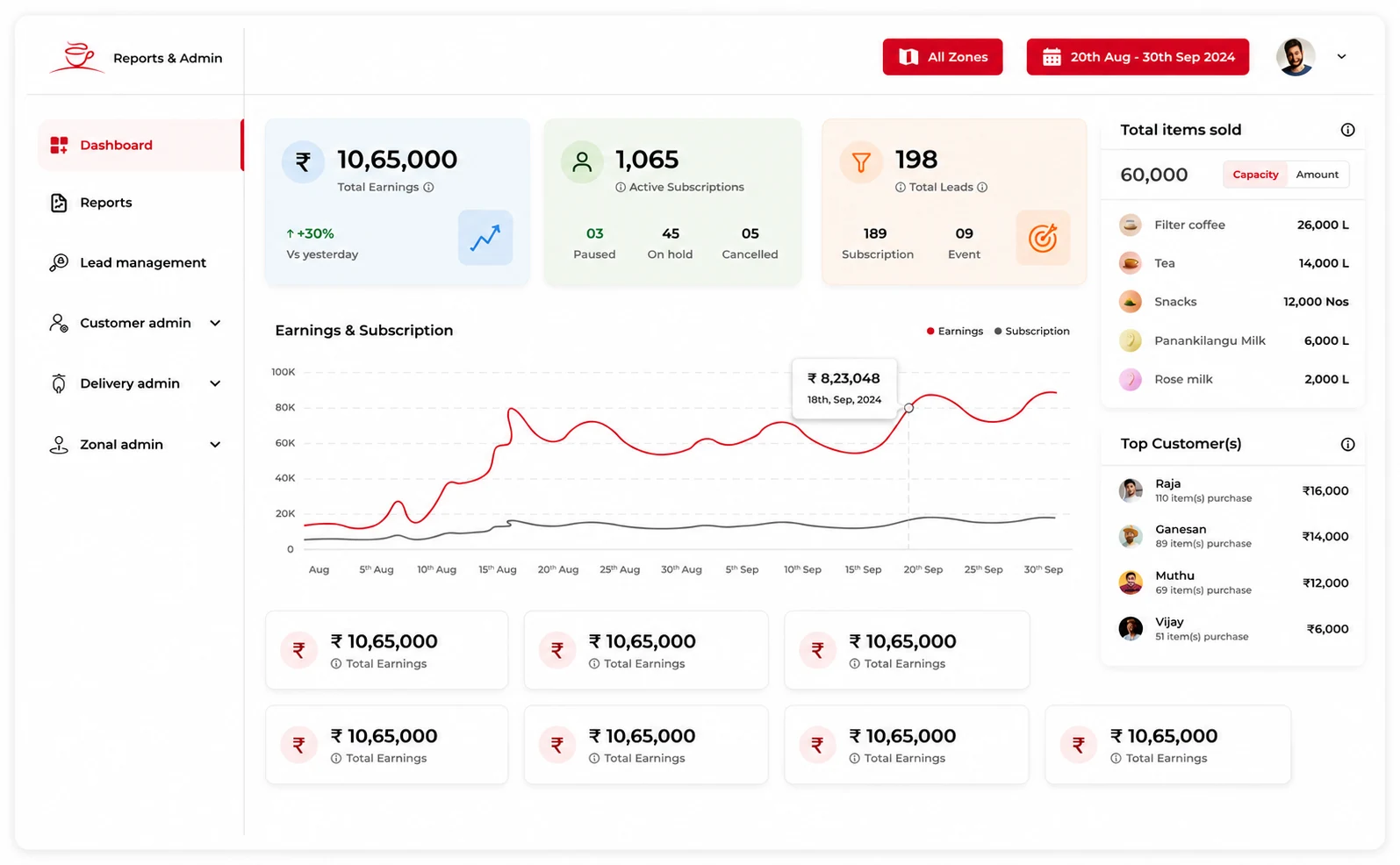
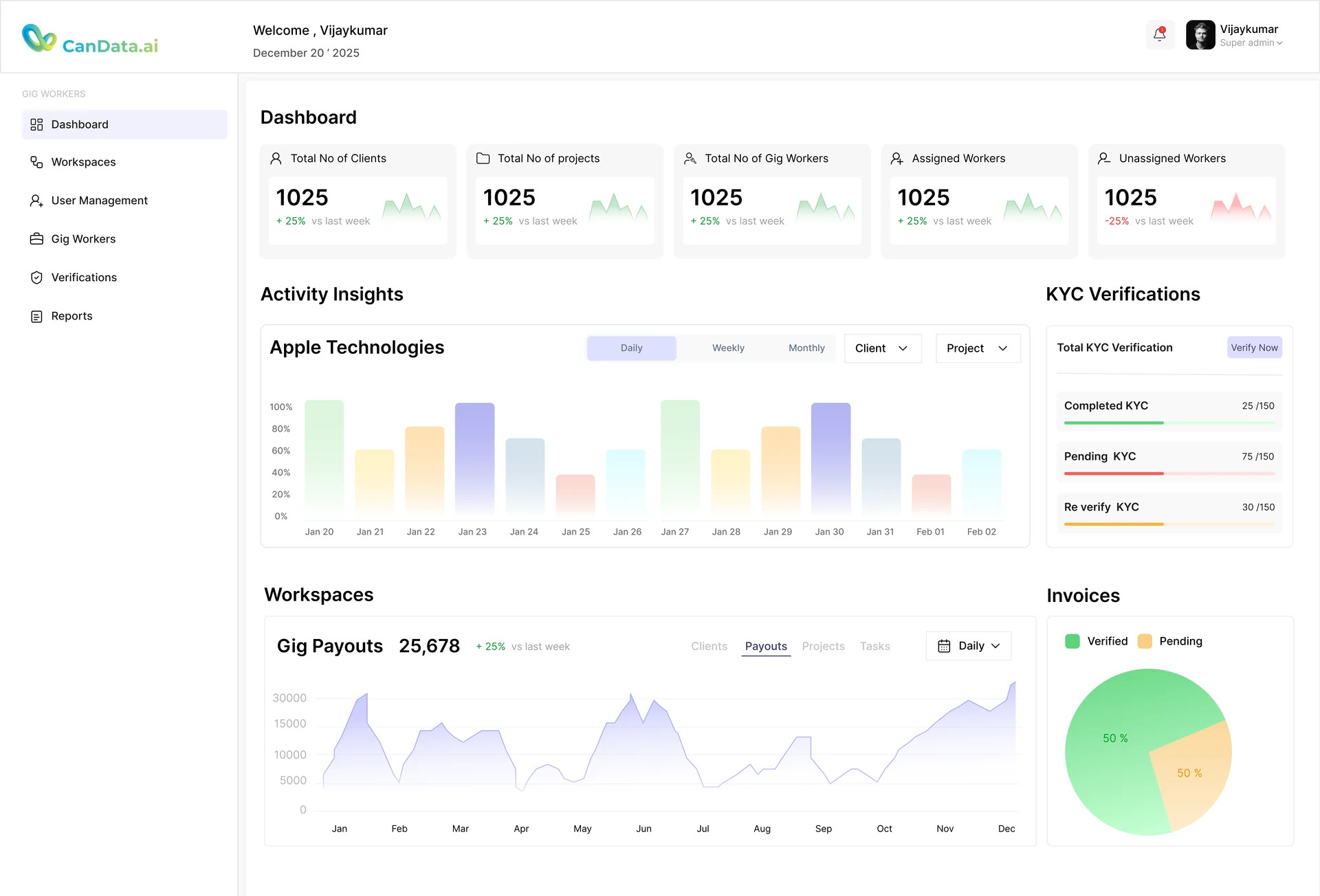
We build operational dashboards that connect to your actual data sources, define the metrics that matter, and surface information for critical decision-making. Instead of relying on static spreadsheets, we develop real-time interfaces with customizable widgets, role-based data filtering, and secure export functionalities. These dashboards are engineered to handle high-volume data aggregation without sacrificing browser performance or rendering speed.
Booking & Management
Booking platforms require real-time availability management, payment processing, notification workflows, and logic that handles concurrent requests without double-booking. We build robust systems that manage complex scheduling rules, calendar integrations, and automated reminders. Security and transaction reliability are built into the core architecture, ensuring your booking engine operates flawlessly during peak traffic periods.
Marketplace Platforms
Two-sided marketplace platforms require separate user experiences for buyers and sellers, secure payout infrastructure, and reliable trust mechanisms. We design multi-vendor architectures that handle complex commission splits, seller onboarding verifications, and dispute resolution workflows. From product discovery to final transaction, the entire platform is optimized for conversion, speed, and scalable transaction volume.
Business Process Automation Tools
Automation web applications translate rule-based business processes into software that executes without manual intervention. Approval routing, document generation, status notifications, data validation, and compliance reporting are common automation targets. The output is measurable reduction in processing time, error rates, and the staff hours consumed by tasks that should not require human judgment to execute.
Web App vs Mobile App vs Desktop
Understanding when to build a web application versus a native mobile or desktop app is a critical architecture decision. Here is how web apps compare across key technical and business vectors.
| Feature / Requirement | Mobile App | Desktop App | Web App RECOMMENDED |
|---|---|---|---|
| Installation & Access | Requires App Store download and installation | Requires local OS installation and setup | Instant access via any modern web browser |
| Cross-Platform Compatibility | Requires separate builds for iOS and Android | Requires separate builds for Windows and macOS | A single codebase runs on all operating systems |
| Updates & Maintenance | Users must actively download and install updates | Relies on manual or scheduled user updates | Users are always on the latest version instantly |
| Offline Capabilities | Excellent native offline support | Full offline execution and data storage | Limited (unless architected specifically as a PWA) |
| Development Cost & Time | High (often requires maintaining two codebases) | High (requires OS-specific logic and testing) | Most efficient (single codebase for all platforms) |
Our Web Application Development Process
Discovery and Requirement Mapping
Discovery is where business goals, user requirements, integration constraints, and definition of done are documented as a formal specification. Projects that begin development without a documented specification are the ones most likely to require expensive scope corrections mid-build.
UX/UI Planning and Prototyping
Interface design begins with the workflows users need to complete, not with visual styling. We produce wireframes that map to documented user journeys, interactive prototypes for complex interactions, and a validated design specification before development begins.
Architecture and Technology Selection
Architecture decisions made before development determine the ceiling of what the system can do and the cost of extending it over time. Technology choices are justified against specific performance requirements, integration landscape, and maintenance context of the project.
Agile Development
Development follows sprint cycles with defined acceptance criteria, code review gates, and demo cadences. We build in layers: data models and business logic first, then API layer, then UI implementation, so integration issues surface early.
QA and Security Testing
Quality assurance runs parallel to development rather than as a final phase. Coverage includes unit testing, integration testing, end-to-end automated testing, performance testing under realistic load profiles, cross-browser validation, and security review.
Deployment and Launch
Production deployment follows a structured process: staging environment validation, production configuration review, rollback plan preparation, and a monitored launch window. We configure observability infrastructure before the first user reaches the system.
Technologies We Work With
Technology selection on web application projects follows the requirements of each engagement: performance targets, integration landscape, team continuity needs, and the organization's long-term maintenance capacity. Select a layer below to explore our stack.
Frontend Layer
5 toolsArchitecture Rationale
Component-driven UIs with server-side rendering and static generation for performance and SEO
Web App Development Cost in USA
Web application development cost is determined by specific, measurable factors. Providing a price range without understanding scope is not meaningful; the variables below explain why projects differ significantly and what to address during discovery to produce accurate estimates.
Application Scope and Feature Complexity
The number of distinct features, user roles, permission structures, data entities, and business rules is the primary cost driver. A simple three-role internal tool with a basic data model costs a fraction of a multi-module SaaS platform with billing infrastructure, complex workflow logic, and a public API. Complexity that is not documented during scoping tends to emerge during development when it is most expensive to address.
Integration Requirements
Every external system integration adds engineering time for API research, authentication handling, data mapping, transformation logic, error handling, and testing. A project integrating with five external systems takes significantly longer than a standalone application. Integration timelines should be estimated only after reviewing the relevant APIs, which is a discovery-phase activity, not a proposal-stage assumption.
Design and UX Requirements
Custom design systems, accessibility compliance across assistive technologies, responsive layout complexity, animation and interaction design, and multi-brand or multi-tenant UI all add time to design and frontend engineering. Using an established component library reduces this; building a fully custom visual system increases it. Design investment has a direct effect on user adoption and the long-term cost of maintaining the interface.
Security and Compliance Scope
Applications handling financial transactions, personal health information, or sensitive organizational data require additional architectural review, penetration testing, and compliance documentation. For applications subject to SOC 2, HIPAA, or PCI-DSS requirements, compliance controls must be defined during architecture design, not discovered after development is underway. Retrofitting compliance is significantly more expensive than designing for it from the start.
Infrastructure and Deployment Requirements
Cloud infrastructure architecture, environment setup, CI/CD pipeline configuration, monitoring and alerting, disaster recovery planning, and data residency requirements all contribute to the cost of delivering a system that is production-ready from day one. Multi-region deployment, high-availability architecture, and strict uptime SLAs increase this investment.
Team Composition and Engagement Duration
Senior engineers cost more per hour and typically produce architectures that require less rework over the product's lifetime. Teams with dedicated QA, a product strategist, and DevOps capability cost more per sprint but reduce the post-launch incident rate and the cost of extending the system as requirements evolve. Short-term cost optimization in team composition tends to produce long-term cost amplification.
Post-Launch Support and Iteration
The total investment in a web application includes the cost of keeping it current after launch. Framework updates, security patches, browser compatibility changes, and the incremental features that users request after going live are part of the product lifecycle. Budgeting only for the initial build and leaving post-launch support unplanned produces systems that degrade and eventually require emergency spending to stabilize.
Common buyer mistakes when evaluating web app development cost
- ✕Accepting a fixed-price quote that was not preceded by a thorough discovery engagement
- ✕Comparing hourly rates without understanding team seniority composition or what the rate includes
- ✕Underestimating integration complexity because the vendor did not test the relevant APIs before estimating
- ✕Not budgeting for post-launch support, which is nearly always required within 60 days of production launch
- ✕Optimizing for lowest initial cost rather than lowest total cost of ownership over 24 months
Why Choose Noukha as Your Web App Development Company in USA
Noukha is a software and AI development company with delivery operations serving clients in the USA, UK, Canada, and India. The points below describe specifically how we work and what that means for a web application engagement.
Discovery Before Development, Always
We do not begin development until the requirements specification is documented and the architecture is approved by the client. Both documents are produced as explicit deliverables during the discovery phase and reviewed in a client-facing gate before the first development sprint begins. This eliminates the category of mid-project scope corrections that arise when teams build on verbal requirements or sales-stage assumptions.
Architecture Designed for the Next Three Years
Our technical architecture documents specify modular component boundaries, API contract definitions, database schema design, and security architecture as explicit constraints reviewed before development. The practical result is a codebase that can absorb new features, additional integrations, and increased load through extension rather than rewrites, which reduces the total cost of ownership as the product evolves.
Full-Cycle Accountability Under One Team
A Noukha web application engagement covers product strategy, UI/UX design, frontend engineering, backend development, cloud infrastructure, DevOps, QA, and AI integration within a single accountable team. There is one project lead and one delivery organization responsible for the complete outcome. Clients do not coordinate between a design firm, a development agency, and a hosting provider.
Integration Depth That Does Not Surprise
We document every integration requirement during discovery and test the relevant APIs before committing to timeline estimates. Integration layers are built with proper error handling, retry logic, circuit breakers, and monitoring. Integration failures discovered late in development are one of the most common causes of web app project overruns. We address this by treating integration as a first-class engineering concern from the first week of a project.
Security Addressed at Four Points
Security is reviewed at architecture design (security architecture section in the technical document), code review (security checklist applied in every sprint), QA (OWASP Web Application Security Testing Guide applied before each release), and deployment (infrastructure configuration validated against security baselines). For applications subject to SOC 2, HIPAA, or PCI-DSS, security documentation is produced as a delivery artifact.
Post-Launch Support Scoped Before Delivery
Post-launch support agreements are defined and contracted before the project is delivered, not sold as an afterthought. Agreements specify response time SLAs by issue severity, covered maintenance activities, and planned development capacity. The engineering team that built the system continues to support it, preserving the codebase knowledge that accumulates during development rather than handing off to a separate maintenance team.
U.S. Market Understanding & Time Zone Coverage
Noukha's commercial operations are structured around U.S. client communication requirements. Project leads maintain defined overlap windows with U.S. business hours for EST, CST, MST, and PST time zones. U.S. buyers evaluating web application development partners typically face a choice between U.S.-only teams at significantly higher rates and offshore teams with communication friction. Noukha is structured to provide engineering quality at an international delivery cost without the coordination overhead that typically comes with fully offshore engagements.
Client Outcomes
The projects below represent the kinds of US-market web application engagements we run. Specific client names are kept confidential at client request. Outcomes are based on actual project results.
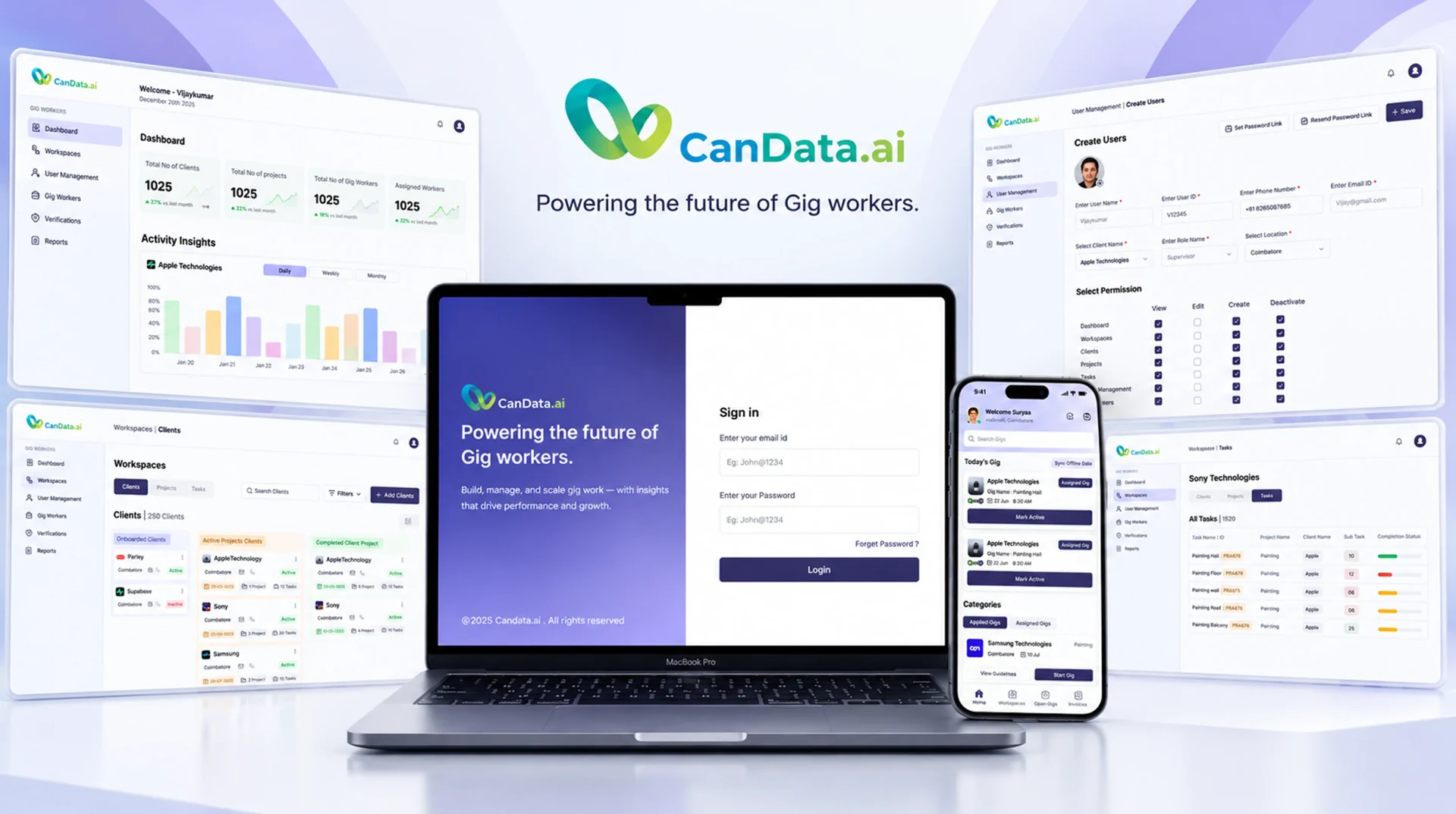
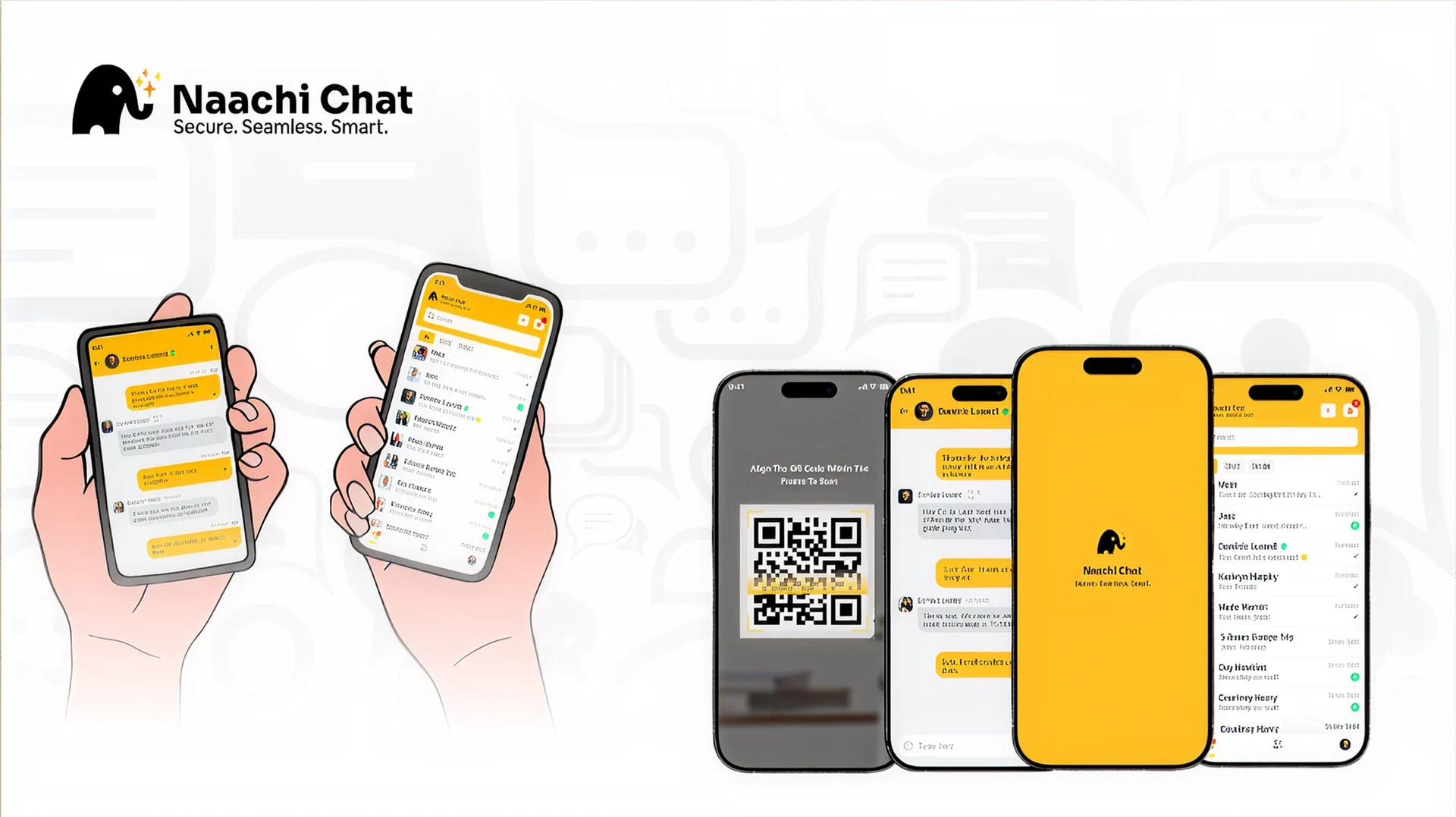
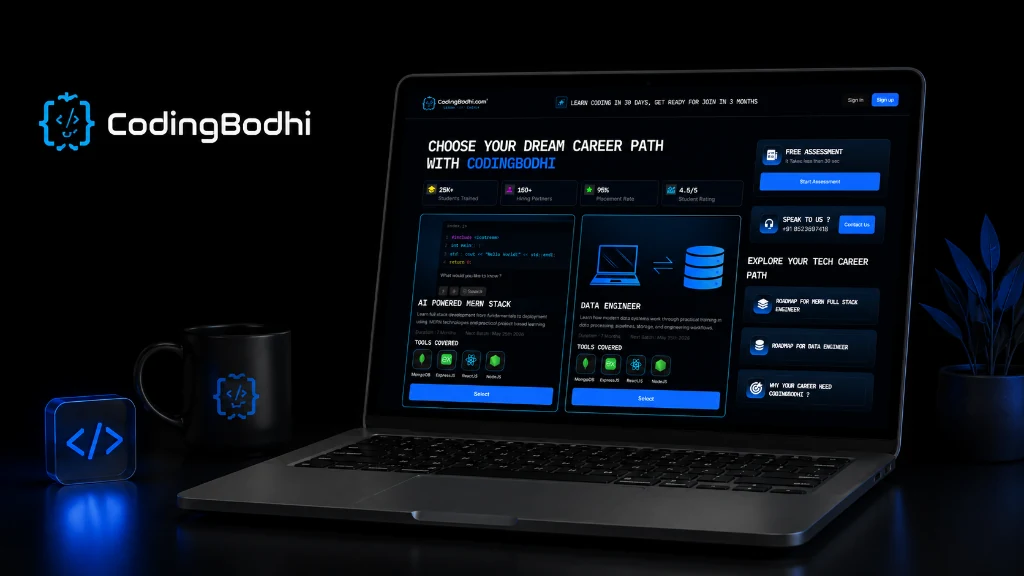
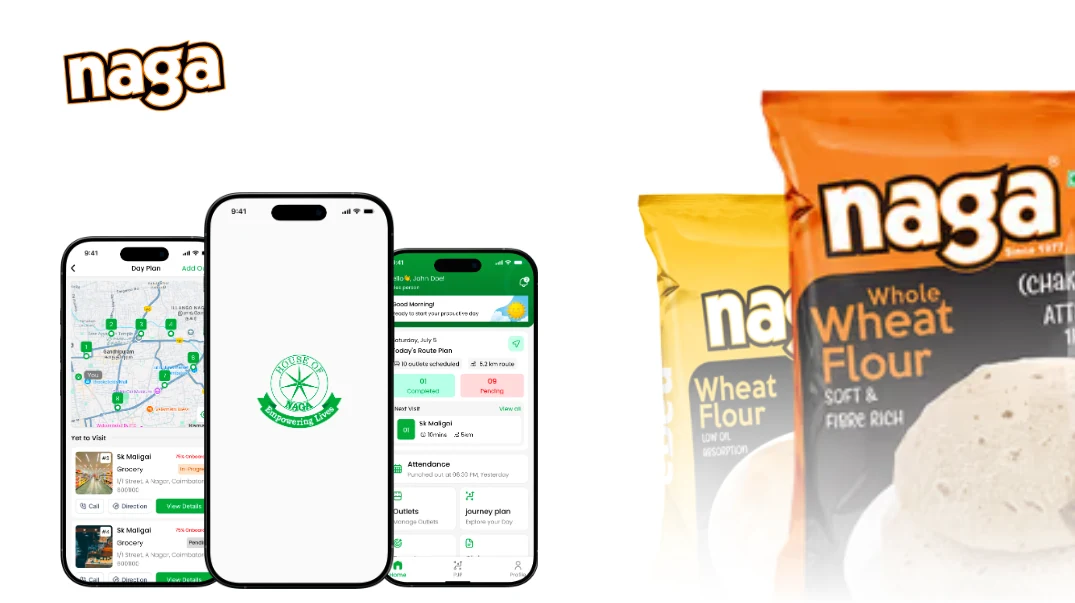
Client Testimonials
These are not pulled quotes from a curated highlights reel. They are representative of the feedback pattern we receive consistently across projects — particularly around communication, technical quality, and delivery reliability.
- We had to build a website from scratch on a tight deadline with only a rough outline to start. The Noukha team, led by Ram, tackled the challenge with energy and insight—quickly understanding our unique concept and offering smart solutions. Despite the short timeline, they delivered a fully functional site with multiple form integrations and three API call-outs. The design, user flow, and execution were flawless, letting us launch smoothly. Big kudos to the Noukha team—I highly recommend them for any complex, time-sensitive web project!
 Arun NairCEO, Startup Singam
- Working with Noukha is a great experience. They are fair, knowledgeable, organised and responsive and importantly, their responses are always considerate. Working together is a hugely collaborative and positive experience. We'd work with them again without hesitation.
 Gus CameronFounder, The Circles Club
 - Working with Noukha has been an outstanding experience. From day one, they took the time to understand our product vision and goals, delivering high-quality work across both frontend and backend with clean architecture and thoughtful design. Communication was clear, proactive, and solution-oriented. What truly set them apart was their genuine investment in our success—they felt more like partners than vendors. Thanks to their support, we’ve made incredible progress and are confident we’re building something scalable and meaningful. We highly recommend them to any startup.
 Vikas SharmaFounder, Ohana
 - We partnered with Noukha Technologies for our AI project, and the experience exceeded our expectations. Their team delivered with exceptional quality and impressive speed, ensuring we met our timelines without compromising on performance or reliability. Their professionalism and technical expertise make them a trusted technology partner
 Vivek DevarajCo-Founder and CTO, CogniSaaS
 - Working with Ram and his team at Noukha on our new website was an outstanding experience from start to finish. As a small but growing firm, we needed a custom site that reflected our values-clarity, precision, and professionalism-and they delivered on every front. From the first conversation, they understood how to translate our vision into a compelling, well-structured digital presence. The design is clean and modern, the layout flows intuitively, and the site performs beautifully across all devices. They also implemented subtle animations and interactions that give the site a polished, high-end feel.
 ZACHARY TREECEFounding Principal, Treece
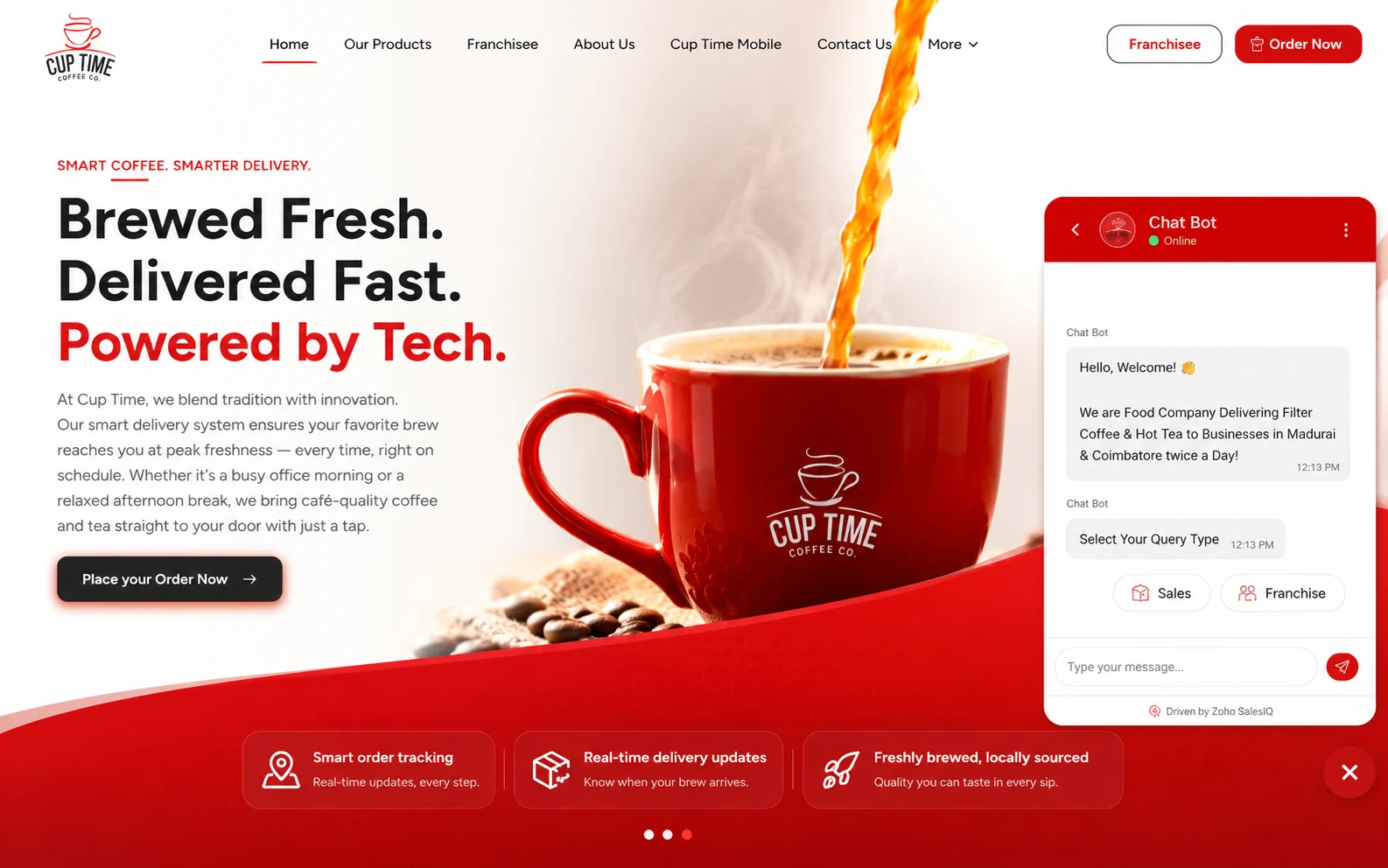
 - Team Noukha did an exceptional job building my MVP, delivering it quickly and providing excellent support throughout. Impressed by their expertise and efficiency, I entrusted them with developing the full product, including mobile apps (Delivery and Customer) and a web app. They understood my vision effortlessly and turned it into the perfect startup product. I highly recommend their team for their dedication and startup expertise.
 PRABAHARAN VENUGOPALFounder, Cuptime
 - I sincerely appreciate the effort taken to develop this mobile application. It is a great initiative to strengthen communication between employees and management. The app creates a transparent and direct platform to share concerns and updates. Well done to the Noukha team for this valuable contribution.
 RANJEETH SSr.Consultant, Opal LLC
 - I am delighted to share my experience working with Noukha Technologies, who recently developed a prototype of the NaachiChat application for me. From the very beginning, the team demonstrated high professionalism and friendliness. They took the time to truly understand my requirements, listened attentively, and translated my vision into a quality application that met my expectations in every way. Having worked with other development teams, I can confidently say that Noukha Technologies stands out above the rest, particularly regarding client support. Their ability to accurately capture needs and deliver exceptionally high-quality work sets them apart. In fact, Noukha Technologies exceeded my expectations, and I do not make recommendations lightly. I would wholeheartedly recommend Noukha Technologies to any client seeking a reliable, skilled, and client-focused development partner.
 Karthikeyan SukumaranFounder, Naachi Research and Innovation Foundation
 - We had a very positive experience working with you.Your team was easy to approach, technically knowledgeable, and delivered with impressive speed.Your design sense was strong and aligned well with our expectations.
 Ragunath ThirumalaisamyCEO, It's Showtime
 - Noukha is an excellent team to partner with. They are developing my product from scratch and are always approachable and flexible with changes. I fully rely on them for all things technical and look forward to the next phase. Highly recommended and worth every penny!
 Sridharan ManoharanFounder, CodingBodhi Learning Solutions Private Limited
Engagement Models
Fixed-Scope Project
Well-defined requirements with a clear deliverable and timeline
Scoped during discovery; priced against a defined specification; delivery milestone-based
Dedicated Development Team
Ongoing product development or complex platforms requiring sustained velocity
A dedicated team embedded in your product process; billed monthly; scales with the project
Post-Launch Support and Enhancement
Products already in production that need maintenance, iteration, or optimization
Structured support agreement with defined SLA tiers and monthly development capacity
Most engagements begin with a fixed-scope discovery phase that produces the requirements specification and architecture design. Clients then choose whether to proceed with a fixed-scope build, move to a dedicated team model for ongoing development, or contract post-launch support independently. The discovery output gives you the information to make that decision before committing to a larger engagement.
Industries We Serve
Noukha builds web applications across industries where compliance, integration depth, or operational complexity makes generic SaaS tools inadequate.
We build school and university platforms that make administration simpler and learning more accessible — attendance tracking, fee management, student portals, and communication tools that actually get used.
From video-based course platforms to interactive assessments and live class tools, we build e-learning apps that hold learners' attention and give course creators the analytics they need to improve over time.
We build fast, conversion-focused retail apps with smooth product browsing, reliable cart flows, multiple payment options, and real-time order tracking — everything a modern retailer needs in one place.
Property search, virtual property tours, inquiry management, and agent dashboards — we build real estate apps that reduce the friction between a buyer's interest and an agent's follow-up.
Booking flows, itinerary management, hotel and venue discovery, and loyalty programmes — we help travel and hospitality businesses give their customers a seamless digital experience from planning to check-out.
We build ordering apps, kitchen display systems, table management tools, and loyalty platforms for restaurants, cloud kitchens, and F&B chains that want their digital experience to match their food quality.
Content streaming, digital rights management, fan engagement platforms, and event apps — we help media companies deliver content to their audiences reliably and at scale.
We build patient-facing apps and clinical tools that are user-friendly for non-technical users, secure for sensitive data, and HIPAA-aligned for healthcare compliance requirements.
Site inspection tools, project progress tracking, material requisition, and workforce coordination — we build field-ready apps that construction teams can use effectively even in areas with poor connectivity.
Frequently Asked Questions
Get clear, honest answers about web app development timelines, costs, and processes for US businesses.
Let's Build Something Great Together
- Free 30-minute consultation call — no sales pressure
- Detailed, itemised project quotation within 48 hours
- No lock-in commitments or upfront fees
Let’s Build Something Great Together
Looking to build a custom software solution, AI product, or digital platform? Use the form below to tell us about your project. Our team will respond within one business day.
Please share a few details. A team member will get back to you within one business day.
From our offices in the UK, India, and Canada, we work with clients across borders to deliver reliable software solutions.