Home > Services > Generative AI Development > USA
GenerativeAIDevelopmentCompanyinUSAforProduction-GradeLLMApplications
Most organizations exploring generative AI are not short of ideas for what AI could do for them. The gap is between a proof-of-concept that works in a controlled demo and a production system that performs reliably with real users, real data volumes, and real operational consequences when it fails.
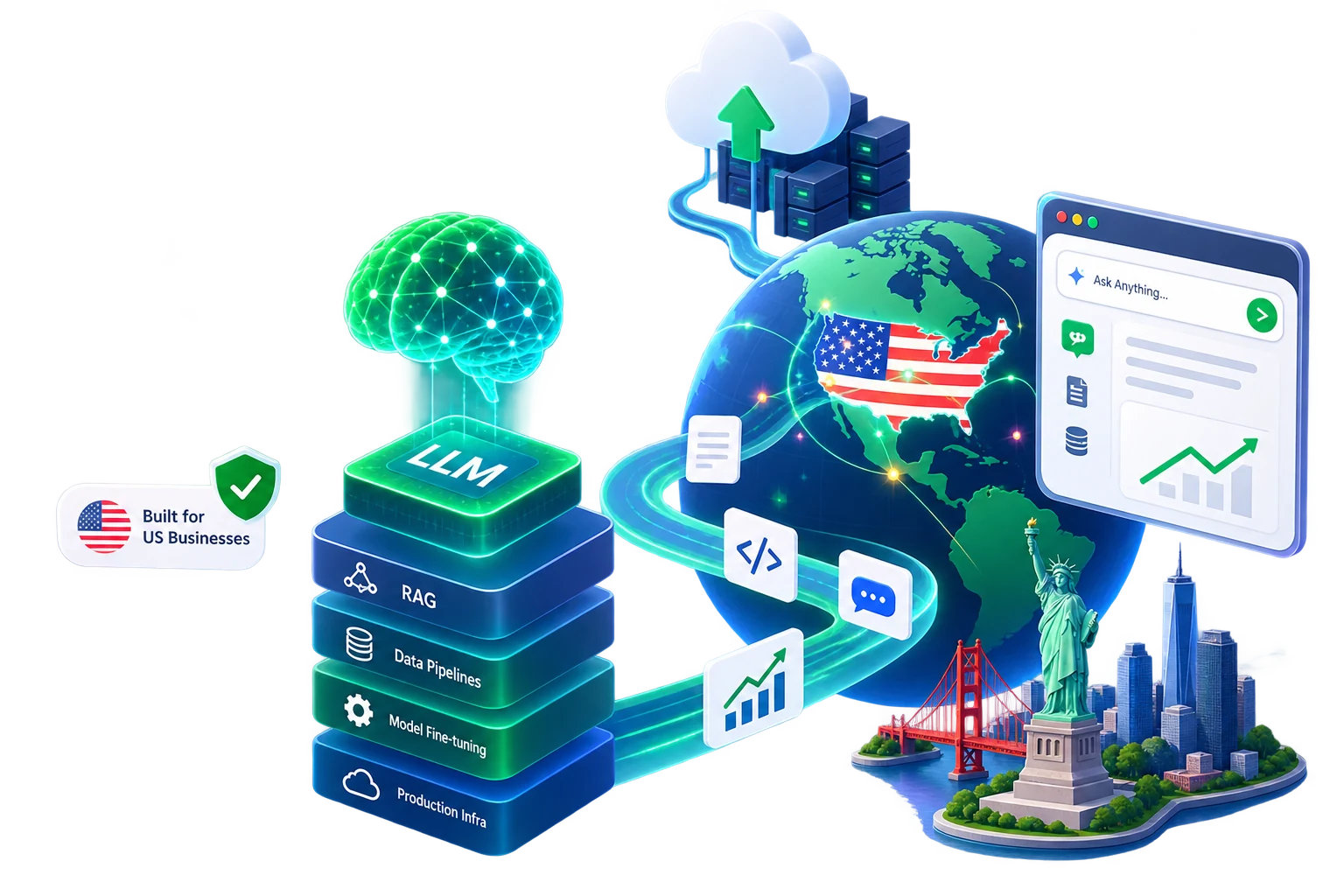
Noukha is a generative AI development company in USA that builds LLM-powered applications, retrieval-augmented generation systems, and AI-integrated business workflows designed for production rather than demo conditions -- covering model selection, prompt architecture, retrieval pipeline engineering, evaluation frameworks, and deployment infrastructure.
Delivered projects
Successfully Delivered Projects
Positive reviews
Satisfied Customers
Senior Talents
High-Class Specialists
Clutch Rated
Top-Rated Service Provider
Built for production, not demo conditions.
Most GenAI proof-of-concepts are built against a clean dataset, a controlled prompt, and a single user under observation. Production removes all three conditions at once.
Building only the model layer and calling it a GenAI product produces a system that works in demos and breaks under the conditions real users create. We build the application, orchestration, retrieval, model, and evaluation layers together, from a documented specification the engineering team can build against.
The Proof-of-Concept to Production Gap
Real users write queries no one anticipated, the production dataset has inconsistencies the POC dataset did not, and concurrent users expose race conditions single-user testing cannot surface.
An Engineering Discipline, Not an API Call
Integrating a GPT API call is a few hours of work. A system that degrades gracefully, handles rate limits, and produces outputs legal and compliance can stand behind is an engineering discipline.
Evaluation Before Development
We build the evaluation framework before the system, not after -- so quality is measurable and regressions are detectable before they reach production users.
Where GenAI Creates Value — and Where It Does Not
Applying generative AI outside the categories where it creates genuine value wastes engineering effort and creates trust problems when outputs disappoint.
| Use Case Category | GenAI Value Potential | What to Validate First |
|---|---|---|
| Document comprehension and extraction | High: LLMs read and synthesize unstructured text at a speed and scale humans cannot match | Does the output accuracy meet the business standard? What is the acceptable error rate? |
| Draft generation and content assistance | High: first-draft acceleration is measurable; human review still required in most business contexts | What is the human review workflow? How is quality variance managed at scale? |
| Structured data generation from unstructured input | High: converting meeting notes, call recordings, or emails to structured records is a strong use case | What structured schema is required? What validation catches hallucinated field values? |
| Customer-facing conversational interfaces | Medium-High: effective when scope is bounded and fallback to human handoff is designed well | What happens when the model generates an incorrect answer? What is the escalation path? |
| Code generation and developer assistance | High for internal developer tools; careful governance required for production code paths | Is generated code reviewed by engineers before deployment? What is the security review process? |
| Real-time operational decisions | Low without strong validation layer: latency, consistency, and auditability constraints limit use | Can outputs be audited and corrected before they affect operations? What is the rollback mechanism? |
LLM Selection Framework for US Enterprise Use Cases
Model selection is a product decision with significant downstream consequences for cost, latency, output quality, and compliance.
| Model Family | Strengths | Limitations | Best Suited For |
|---|---|---|---|
| OpenAI GPT-4o / GPT-4-turbo | Strong reasoning, multimodal input, large context window, broad ecosystem | Cost at scale; data processed by OpenAI infrastructure; rate limits at high volume | Customer-facing assistants, complex document analysis, code generation, multimodal features |
| Anthropic Claude 3.5 / Claude 3 | Strong instruction following, long context, lower hallucination rate on factual tasks, enterprise focus | Narrower plugin ecosystem than OpenAI | Regulated industry use cases, legal and compliance document review, enterprise workflows requiring consistency |
| Google Gemini Pro / Ultra | Multimodal native, deep Google Workspace integration, competitive reasoning benchmarks | Enterprise data governance controls still maturing relative to OpenAI and Anthropic | Google ecosystem integrations, multimodal pipelines, organizations already on Google Cloud |
| Meta Llama 3 / open weights | Fully self-hosted option; no data leaves your infrastructure; no per-token API cost at scale | Requires GPU infrastructure; fine-tuning and prompt work requires more engineering effort | Regulated industries where data residency requirements prohibit cloud model APIs; high-volume applications |
| Mistral / other open weights | Strong performance at smaller parameter sizes; efficient deployment | Smaller context windows; less community tooling than Llama | Cost-sensitive applications, edge deployment, fine-tuning on domain-specific data |
RAG vs Fine-Tuning vs Prompt Engineering: Choosing the Right Approach
For most US enterprise use cases involving internal document knowledge or customer-facing Q&A, RAG is the right starting point.
| Approach | What It Does | When to Use It | Primary Cost |
|---|---|---|---|
| Prompt Engineering | Structures the model's behavior through the system prompt and few-shot examples | When the model already has the knowledge required and needs behavioral guidance on format, tone, or reasoning style | Engineering time to iterate; ongoing prompt version management |
| Retrieval-Augmented Generation (RAG) | Retrieves relevant content from your document corpus and injects it into the model's context at query time | When the model needs access to your proprietary documents, policies, product information, or real-time data | Document ingestion pipeline, embedding model, vector store, retrieval quality evaluation |
| Fine-Tuning | Updates the model's weights using your domain-specific data so the base model behavior reflects your use case | When you need consistent output format the base model does not produce reliably, or domain-specific terminology | Labeled training data preparation, fine-tuning compute, re-evaluation every time the base model updates |
| RAG plus Fine-Tuning | Combines retrieval of current information with a model tuned for your domain's output style | When a single technique is insufficient: domain language requires fine-tuning but current data requires retrieval | All costs of both approaches combined; highest engineering and maintenance investment |
Generative AI Development Services
From a documented use case specification through production evaluation, infrastructure, and deployment.
LLM Application Development
Built from a documented specification covering the target use case, accuracy requirements, acceptable failure modes, and the evaluation criteria that define good output.
Retrieval-Augmented Generation (RAG) Systems
Document ingestion strategy, chunking strategy, embedding model selection, vector store configuration, and retrieval scoring based on your corpus and accuracy requirements.
LLM Fine-Tuning & Model Customization
Honest evaluation of whether fine-tuning is justified, labeled data preparation, fine-tuning job configuration, and regression evaluation against the base model.
GenAI Workflow & Process Integration
Automation steps inserted into existing business workflows -- document review, draft generation, and classification -- with explicit human review and audit logging.
Multimodal AI Application Development
Vision capabilities of GPT-4o and Gemini, speech-to-text integration, document parsing pipelines, and input normalization for mixed text and visual content.
GenAI Evaluation & Quality Systems
LLM-as-judge pipelines, regression test suites, golden dataset construction, and production monitoring that surfaces quality drift before users notice it.
GenAI Infrastructure & Deployment
GPU resource management, model caching, context window management, rate limit handling, streaming delivery, and observability tooling for production systems.
GenAI Applications We Build
The AI handles the reading, extraction, or drafting work. A human reviews the structured output.
Intelligent Document Processing
Contract review, insurance claims processing, compliance document review, and financial statement analysis -- the AI extracts, a human reviews the structured output.
Enterprise Knowledge Management & Search
RAG-powered knowledge systems that let employees query policy libraries and technical documentation in natural language, with answers grounded in your actual documents.
Customer-Facing AI Assistants
Assistants built on your product documentation and support history that handle high-volume, well-defined inquiries while escalating out-of-scope questions to human agents.
Code Generation & Developer Tooling
Internal developer tools that generate boilerplate, convert legacy code, produce test cases, and answer codebase questions -- deployed behind your authentication boundary.
AI-Augmented Business Reporting
Reporting pipelines that pass structured query results to an LLM prompt engineered to generate narrative analysis, flag anomalies, and draft executive summaries.
Specialized Domain Applications
Healthcare clinical note summarization, legal contract playbook review, and financial services compliant disclosure generation -- each with domain-specific evaluation criteria.
Production Architecture for Generative AI Systems
Differs from standard web application architecture in ways not obvious until you are debugging a latency spike or a cost overrun.
Orchestration Layer Design
Routing queries to prompt templates, managing multi-turn conversation state, chaining model calls, and handling retry and fallback logic when calls fail.
Context Window & Token Budget Management
Prompt compression, retrieval result count tuned to token budget, conversation summarization for long sessions, and model selection based on context length.
Latency Architecture for User-Facing Apps
Streaming responses that display output as tokens arrive, speculative and semantic caching, and asynchronous generation with progress indication.
Observability & Cost Management
Per-request token tracking, cost attribution by feature and user segment, latency percentile monitoring, and output quality monitoring via automated checks.
Guardrails & Output Validation
Structural format compliance, content policy enforcement, factual grounding checks against retrieved documents, and PII detection before outputs reach logging.
AI Risk, Governance & Compliance in the US Context
US enterprises deploying GenAI need to address governance proactively rather than waiting for specific regulations to require it.
NIST AI Risk Management Framework
We structure engagements to produce documentation supporting AI RMF alignment: use case risk assessment, performance measurement, and incident response procedures.
Sector-Specific AI Requirements
FDA guidance and HIPAA for healthcare, CFPB guidance and Fair Lending for financial services, and attorney-client privilege considerations for legal applications.
Data Privacy & Model API Terms
We evaluate data flow against CCPA/CPRA, CDPA, CPA, and other state privacy laws before finalizing which model APIs are permissible for a given data type.
AI Output Auditability
Every output has a traceable record of the prompt, retrieved context, model version, and response, with a defined process for correcting incorrect outputs.
Our AI Technology Stack
We use modern tools and models to build secure, robust, and highly scalable applications.
Our GenAI Development Process
Each phase produces a written deliverable reviewed by the client before the next phase begins -- surfacing the questions that distinguish production deployments from stalled POCs.
Use Case Validation & Problem Scoping
We document the input-output transformation, accuracy requirements, input volume and variety, acceptable failure mode, and data sources before any model evaluation begins.
Data Assessment & Architecture Design
We assess document corpus coverage, freshness, and format consistency, then produce an architecture document covering model selection and infrastructure requirements.
Evaluation Framework Construction
We build the golden dataset, automated evaluation metrics, and human evaluation rubric before the system is built -- this is what sprint reviews are measured against.
Iterative Engineering with Evaluation Gates
Sprints run against defined acceptance criteria. Prompt, retrieval, and model changes are tracked as experiments with before-and-after evaluation metrics.
Production Hardening & Deployment
Guardrail implementation, rate limit handling, streaming configuration, semantic caching, observability instrumentation, and load testing under realistic query volumes.
Post-Launch Monitoring & Model Governance
We track token cost, latency, and error rates by category, and run regression evaluation whenever a model provider updates a base model without notice.
Why Choose Noukha as Your Generative AI Development Company in USA
We validate use case fit and build the evaluation framework before the first engineering sprint -- on every GenAI engagement we run.
Use Case Validation Before Model Selection
We validate use case fit and define evaluation criteria before recommending a model or architecture, so engineering is directed at a problem GenAI can actually solve.
Evaluation-Driven Development
Every engagement produces an evaluation framework before the first sprint. Development is driven by metrics, not qualitative impressions of output quality.
RAG Engineering as a Core Competency
We have built RAG systems across PDFs, HTML, structured databases, and conversation logs, and make evidence-based configuration decisions for your corpus.
Production Architecture From Day One
Token budget management, streaming delivery, semantic caching, and output guardrails are scoped as deliverables from the first architecture review.
US Regulatory Context Fluency
We understand the NIST AI RMF and sector-specific AI guidance in healthcare and financial services, applied during architecture design, not after the build.
Model-Agnostic Approach
Production experience across OpenAI, Anthropic, Google, and open-weight models means selection is determined by fit, cost, and compliance -- not habit.
What We Have Built — and What It Delivered
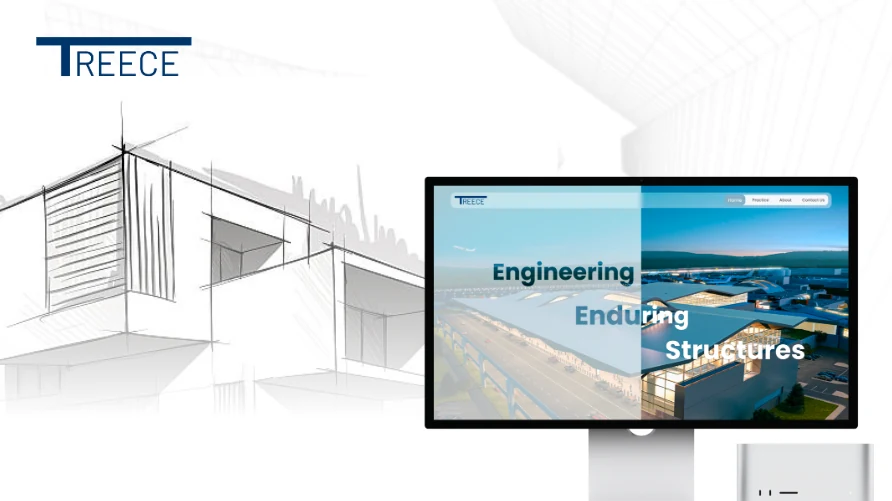
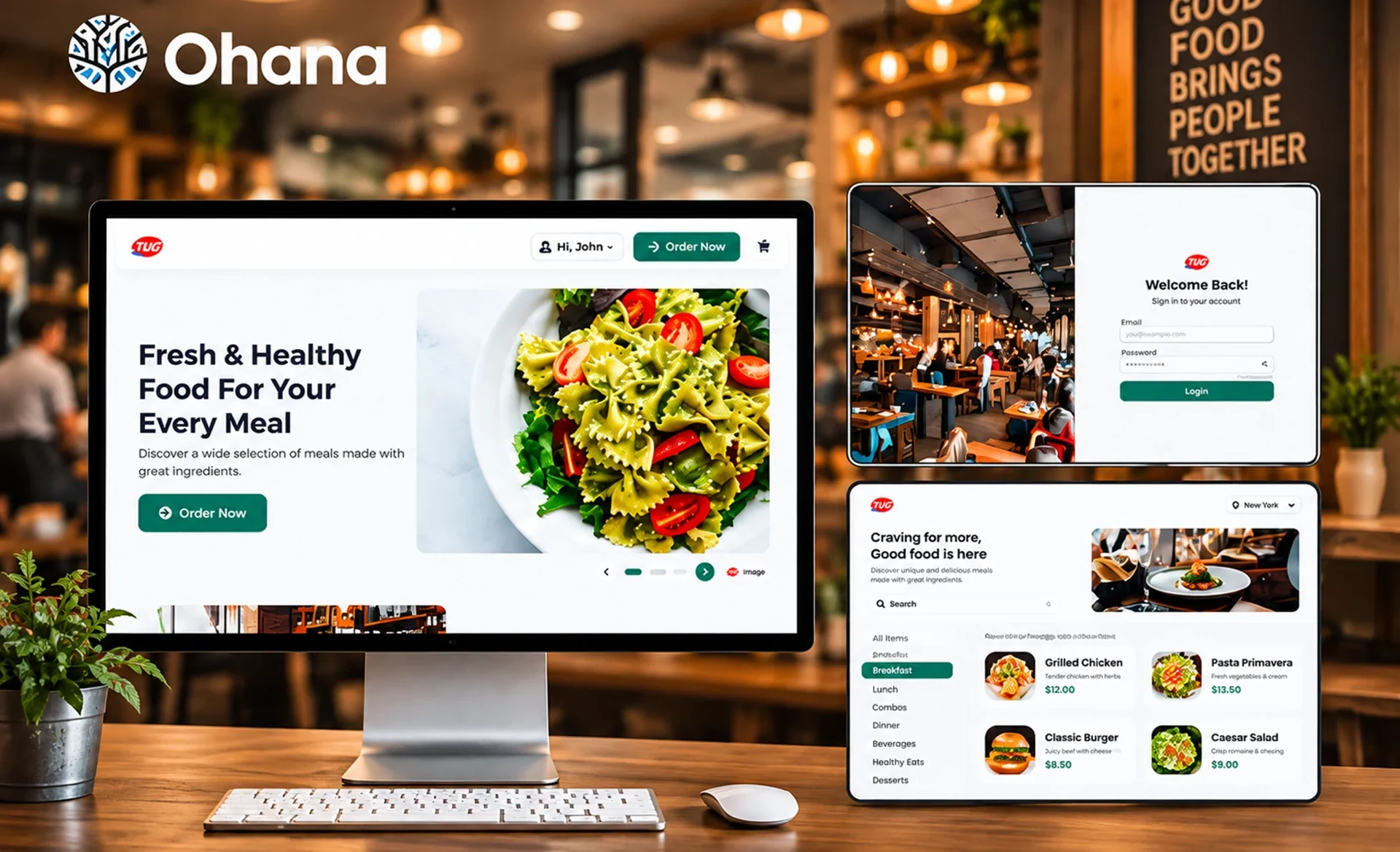
The projects below represent actual Noukha engagements. Client names are withheld at their request. Outcomes are real.
GenAI Development Cost: What Drives It
A focused RAG application typically takes 8 to 14 weeks. A multi-feature GenAI product with fine-tuning and compliance requirements typically takes 16 to 28 weeks.
Use case complexity & accuracy requirements
A simple RAG application costs significantly less than a multi-step reasoning system producing auditable decisions across an ambiguous input space.
Document corpus preparation
Corpora with inconsistent formatting, outdated information, and poor metadata require pre-processing that is often the largest line item on RAG projects.
Model API cost vs infrastructure cost
At high query volumes, API cost becomes significant and self-hosting open-weight models on GPU infrastructure becomes economically competitive.
Evaluation & quality engineering
Building an evaluation framework and golden datasets adds engineering time that reduces the risk of discovering quality problems in production.
Compliance & governance scope
Healthcare, financial services, and legal contexts require additional architecture work for auditability and regulatory documentation.
Straight from the Clients Who Worked with Us
These are not pulled quotes from a curated highlights reel. They are representative of the feedback pattern we receive consistently across projects -- particularly around communication, technical quality, and delivery reliability.
START WITH A USE CASE VALIDATION CONVERSATION
- Free 30-minute consultation call — no sales pressure
- Detailed, itemised project quotation within 48 hours
- No lock-in commitments or upfront fees
Frequently Asked Questions
Common questions US businesses ask us before starting a generative AI development project.
Let’s Build Something Great Together
Looking to build a custom software solution, AI product, or digital platform? Use the form below to tell us about your project. Our team will respond within one business day.
Please share a few details. A team member will get back to you within one business day.
From our offices in the UK, India, and Canada, we work with clients across borders to deliver reliable software solutions.